

Why can added years and a water conduit never guarantee an inheritance of faithfulness for the next generation?
Study overview
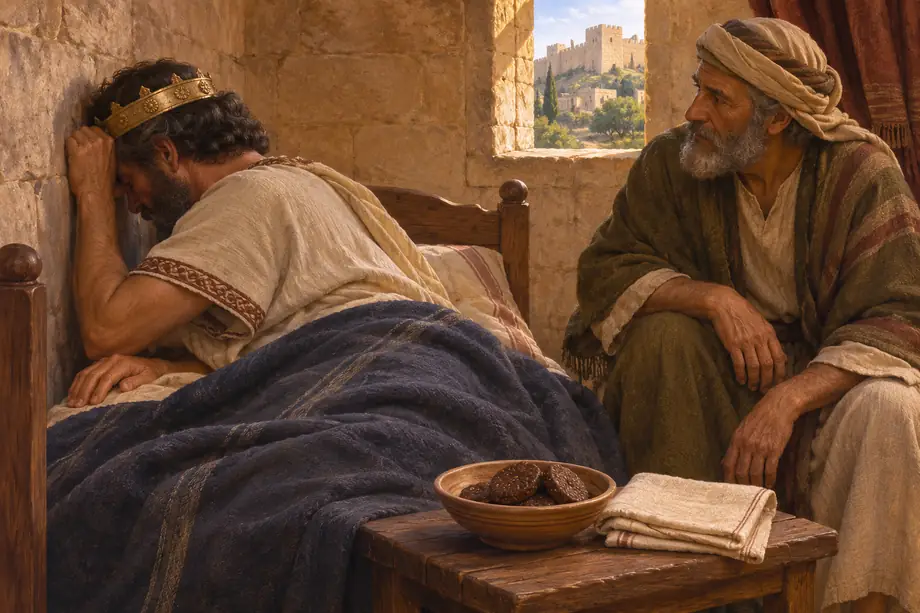
The city has survived the enemy's threats; but the king lies in bed, facing the wall. Tears rise like a prayer; a shadow retreats along the steps. Years are added; the heart receives another chance. Then visitors arrive bearing gifts. The treasury doors swing open; but a shadow gathers over tomorrow. Will the one rescued today remember the children of tomorrow?
- Primary passage:
- 2 Kings 20:1–21.
- Guiding question:
- Will the time God grants produce humility and responsibility, or will the comfort of the present become more important than the well-being of the next generation?
- Central thesis:
- Mercy that adds years to life is not permission to live only for today. God's mercy calls for prayer in the present and responsibility toward the future.
Introduction — When Victory Is Followed by Another Test
Sometimes a great crisis ends, and the human heart assumes the season of testing has ended too. A debt threatening the family home has been paid. A sick family member returns from the hospital. The clouds of war begin to move away. Everyone starts breathing more freely. Yet relief carries its own temptations: exaggerated confidence, fascination with public admiration, and a failure to count the cost that tomorrow's children may pay for today's decisions.
Second Kings 19 closes with Jerusalem rescued from Sennacherib's threats. Hezekiah has spread an intimidating letter before the Lord, praying that the nations might recognize the living God (2 Kgs 19:14–19). Now the narrative turns toward a sickroom. The army outside the walls has been turned away, but the king himself faces death. Hezekiah weeps and prays. The Lord hears. Isaiah returns bearing the promise of fifteen additional years.
We might expect the rest of the chapter to sound like a victory song. Instead, a second door opens: envoys from Babylon, the wealth of the royal household, and an unsettling prophecy about a day when that wealth will be carried away. The king who knows how to spread a threatening letter before God must now decide how to receive a flattering letter from foreign visitors.
The chapter is therefore about more than recovery from illness. It asks what people do with time received as a gift, how political power responds to grace, and whether peace in one generation can come at the expense of the next. An answered prayer is not the end of discipleship. Sometimes the answer is where the next lesson begins.
Historical and Literary Context — Between Assyria and Babylon
Kings narrates history as an assessment of covenant faithfulness. Royal greatness is measured not simply by military strength or economic achievement but by loyalty to the Lord. Hezekiah's father, Ahaz, sought security through Assyria and reshaped temple worship around an altar seen in Damascus (2 Kgs 16). Hezekiah removed illegitimate worship sites, destroyed the bronze serpent that had become an object of worship, and trusted the Lord (18:3–6). Nevertheless, reform did not prevent an Assyrian attack. Chapter 19 portrays prayer as a response to imperial intimidation.
The phrase “in those days” at 20:1 connects Hezekiah's illness with the Assyrian crisis, but it does not establish that every event in chapter 20 occurred chronologically after the withdrawal described in chapter 19. The promise to defend Jerusalem from Assyria at 20:6 suggests that the accounts may overlap. Read chapters 18–20 as a carefully arranged theological narrative rather than an uninterrupted diary (Provan 1995, §53).
Isaiah 38–39 recounts parallel episodes and includes Hezekiah's song following recovery (Isa 38:9–20). Second Chronicles 32:24–31 adds the judgment that Hezekiah became proud, later humbled himself, and was tested in relation to visitors who came asking about a sign. These canonical parallels illuminate the story, but details found in one book should not be silently attributed to another.
Babylon enters the account long before the Babylonian empire becomes Judah's principal enemy. Berodach-baladan, a ruler who at different times resisted Assyrian domination, sends an embassy. Its motives may have included diplomacy or anti-Assyrian cooperation. Second Kings 20 does not explicitly report a military alliance. For readers who know the book's conclusion, however, the name Babylon already carries a warning: chapters 24–25 will describe the fall of Jerusalem into Babylonian hands.
The chapter brings together two realities that cannot be separated: personal mercy and public accountability. The same king who prays for more life is responsible for treasures, defenses, institutions, and people whose lives extend beyond the king's own years.
Walking Through the Text — Tears, a Shadow, and the Treasury
A Sickroom Becomes a Place of Prayer (20:1–3)
Isaiah tells Hezekiah to put his house in order because the illness will end in death. The king turns his face toward the wall and asks the Lord to remember a life lived in faithfulness and with a heart devoted to what is right. Then Hezekiah weeps bitterly.
Unlike Ahaziah, who sent to inquire of Baal-zebub during an illness in 2 Kings 1, Hezekiah turns to the Lord. A king who can command armies cannot command another heartbeat. Here royal power meets a vulnerability shared by every human being.
Hezekiah's prayer calls attention to the king's faithfulness. Some readers may hear a note of self-justification. Yet the Psalms also contain prayers asking God to remember a worshiper's integrity (Ps 26:1–3). The narrative does not explicitly condemn the form of Hezekiah's prayer. Instead, it lets the reader witness a real person bringing fear, faith, and tears before God. Genuine prayer need not arrive in polished sentences.
The Prophet Returns and Mercy Adds Years (20:4–7)
Before Isaiah has gone far, the Lord sends the prophet back. God has heard the prayer and seen the tears. The new word promises healing, worship in the Lord's house on the third day, and fifteen more years. God also promises to defend Jerusalem for God's own sake and for David's sake (20:5–6).
The promise rests on more than Hezekiah's personal merit. The Lord remembers the covenant and shows mercy when the king cannot add a single day to his own life. This declaration echoes the promise to David (2 Sam 7:12–16) and Solomon's prayer that the Lord would hear the afflicted who turn toward the temple (1 Kgs 8:37–40).
Isaiah then orders a poultice made from figs to be applied to the boil or inflamed area. The account places God's promise alongside a concrete act of treatment. Medical care is not an enemy of faith. Neither does this episode promise that every patient will recover if prayer is sufficiently intense. Hezekiah receives a specific promise in a particular story; compassion for today's sick requires prayer, practical care, and honesty about suffering.
A Retreating Shadow and the Gift of Time (20:8–11)
Hezekiah asks for a sign confirming recovery and a return to the house of the Lord. Isaiah points to a shadow moving across steps associated with Ahaz. Hezekiah asks for the less ordinary sign: rather than simply advancing, the shadow should retreat ten steps. Isaiah calls upon the Lord, and the narrator reports that the shadow moves backward.
The image fits the king's condition. Hezekiah has been moving toward the darkness of death; now life is being given back. The narrative does not specify a complete mechanism for the shadow's movement or a precise design for the steps. Its central claim is theological: the Creator holds time and life within divine authority (compare Josh 10:12–14; Isa 38:7–8).
The returned shadow does not erase responsibility. The gift of extra years creates a new question: what will Hezekiah do with the time now entrusted to him? Recovering yesterday is not the same as learning to live wisely tomorrow.
Gifts Arrive and the Treasury Doors Open (20:12–13)
Berodach-baladan of Babylon sends letters and a gift after hearing about Hezekiah's illness. The king receives the envoys and shows them the silver, gold, spices, precious oil, armory, and other treasures. The narrator emphasizes that nothing in the royal storehouses is kept from the visitors' view.
The embassy may appear to be an ordinary diplomatic courtesy. Yet in a book where royal alliances and treasuries repeatedly test allegiance to the Lord, the display carries danger. The king who exposed the threatening Assyrian letter before the Lord now exposes his kingdom's treasures before visiting dignitaries.
Displaying wealth is not automatically wrong in every context. The deeper question is whether prestige, security, and the desire to impress have displaced trust in God. The story invites suspicion about Hezekiah's priorities, but it does not state with certainty the king's motives or establish the existence of a secret treaty with Babylon. Faithful interpretation distinguishes literary suggestion from explicit narrative fact.
Isaiah Asks Questions and Tomorrow Enters the Room (20:14–19)
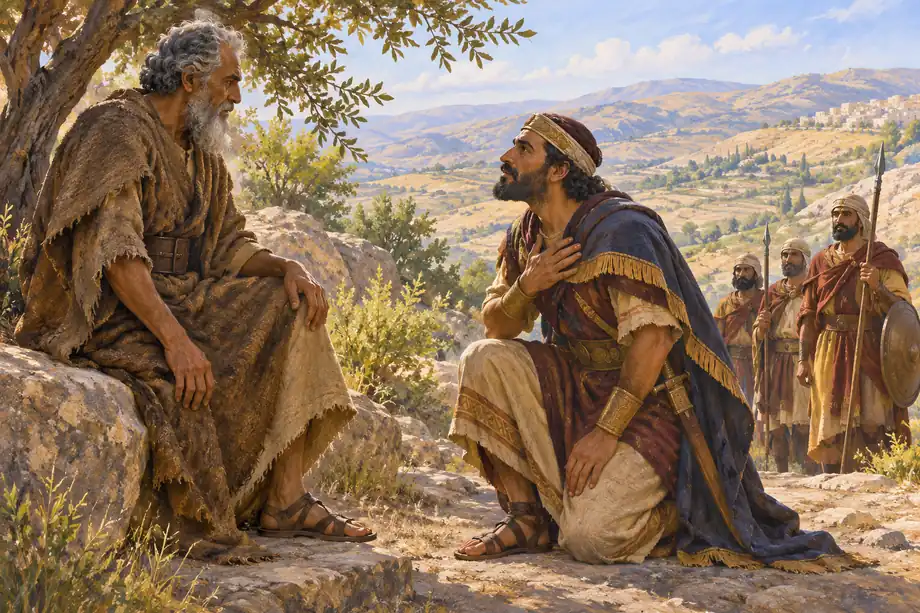
Isaiah asks where the envoys came from and what they saw. Hezekiah replies that they came from Babylon and saw everything. Isaiah announces that a day is coming when the wealth accumulated in the royal household will be carried to Babylon and members of the royal line will be taken to serve in the Babylonian palace.
The prophecy changes the emotional temperature of the chapter. The treasures Hezekiah has displayed will become treasures carried away. The story moves from one man's recovery to the fate of a people and descendants not yet born. The prophecy prepares the reader for 2 Kings 24–25; it does not explicitly claim that the later conquest occurred solely because of this embassy.
Hezekiah says that the word of the Lord is good, and takes comfort in the prospect of peace and security during his lifetime. One reading finds acceptance of God's judgment and gratitude for present mercy. Another hears a troubling narrowness: the king is content as long as disaster falls beyond the king's own horizon. The narrator does not explain the king's final motives. Both the possibility of humble acceptance and the warning against short-sighted leadership deserve attention (Brueggemann 2000, 524–27; Provan 1995, §53).
A Water Conduit and the End of a Reign (20:20–21)
The closing royal notice mentions Hezekiah's achievements, including a pool and a conduit bringing water into the city. Then Hezekiah dies, and Manasseh succeeds him. Preparing a water supply is a wise act of public leadership: a besieged city cannot survive on stone walls alone.
Yet engineering skill cannot resolve the covenant question opened by Babylon's visit. A conduit can protect water for a difficult season. Covenant fidelity must also protect the spiritual and moral direction of the next generation. Hezekiah has brought water into Jerusalem; what will flow into Judah's heart after Hezekiah dies? The name Manasseh turns the page toward chapter 21.
Theological Reflection — Today's Gift and Tomorrow's Responsibility
Prayer Is Relationship, Not Control
Hezekiah prays with tears, and the Lord responds (20:2–6). Human prayer has genuine significance in a covenant relationship, but God is not a machine producing a predetermined outcome. Hezekiah receives a particular mercy within a particular moment in Israel's history. In Gethsemane, Jesus too prays under the shadow of suffering, surrendering to the Father's will (Luke 22:41–44). Believers may pray boldly, seek appropriate treatment, and trust the Lord without claiming Hezekiah's promise of fifteen years for every sick person.
Additional Time Is a Call to Stewardship
Fifteen years remind readers that time is received, not possessed. Psalm 90:12 asks God for wisdom to number our days. Recovery after illness or loss, a second chance in a relationship, or another season of ministry should turn gratitude into service. The important question is not only how much time has been added, but whose lives will be blessed because that time was given.
Public Treasures Reveal the Heart's Allegiance
Hezekiah's treasures relate to national defense, public wealth, and royal prestige (20:13). Material resources matter; they can shelter families and sustain ministries. They can also become an altar of self-reliance. Jesus teaches that the heart follows its treasure (Matt 6:19–21). The parable of the rich fool warns against building large storehouses while neglecting God and the deeper meaning of life (Luke 12:16–21). Worship reaches beyond temple gatherings into budgets, security decisions, and the use of shared wealth.
Mercy and Judgment Share the Same History
This chapter places healing beside an oracle of exile. God's promise to David does not authorize the dynasty to ignore Torah. The long biblical story directs hope toward Jesus, the Davidic King who assumes responsibility for others rather than seeking merely a peaceful reign for himself (Isa 9:6–7; Luke 1:32–33). Hezekiah receives extra years before eventually dying. Jesus enters death and rises, opening a hope death cannot finally extinguish (1 Cor 15:20–26). Christian hope is not endless postponement of tomorrow's troubles; it is new creation through the risen Messiah.
Life Application — Living for Generations Yet to Come
- Bring frightening news before God. In sickness or danger, pray honestly and seek qualified medical care and trustworthy help. Faith and practical action can belong together (2 Kgs 20:2–7).
- Give your recovered time a purpose. Choose one deferred act of love: reconcile with a relative, visit someone who is ill, or offer practical support to a household in need (Ps 90:12).
- Distinguish testimony from display. When speaking about success in ministry, business, or family, honor God's grace and the contributions of others instead of turning achievement into self-advertisement (1 Cor 4:7).
- Protect resources entrusted to a community. Handle church, school, family, and organizational funds with transparency, confidentiality, and accountability. Do not expose sensitive information merely to impress visitors (2 Kgs 20:13).
- Evaluate decisions across generations. Before taking debt, selling communal property, or entering a strategic partnership, consider its cost to children, successors, and neighbors (Prov 13:22).
- Welcome difficult questions from trusted voices. Make room for leaders and advisers who can ask what Isaiah asked Hezekiah. A warning is not necessarily an attack (2 Kgs 20:14–15).
- Do not settle for peace only in your lifetime. Invest in teaching, justice, responsible leadership, and institutions that allow the next generation to inherit more than buildings and bank balances (Deut 6:6–9).
Questions for Reflection
- Which experience of rescue or a second chance should be reshaping the way I use my days?
- When do I feel most tempted to display success rather than bear witness to God's faithfulness?
- Which decision I am making now could become a burden to my family, congregation, or community in ten years?
- Who has permission to ask me honest, uncomfortable questions, as Isaiah questioned Hezekiah?
- If God grants another season of life and service, what fruit would I want future generations to find?
Response Prayer — Teach Us to Number Our Days
Lord of life and history,
When Hezekiah turned toward the wall, the king's tears were not hidden from you. Thank you for mercy that hears the cry of a frightened heart, for the gifts of care and healing, and for each day entrusted to human hands. Give us wisdom to receive additional time without turning the gift into an occasion for pride.
Forgive the moments when success becomes a mirror for self-admiration rather than a window toward your goodness. Guard us from decisions that decorate the present while leaving burdens for tomorrow's children. Teach us to steward resources responsibly, listen to wise correction, defend the vulnerable, and serve those who suffer.
As the shadow retreated on the steps of Ahaz, remind us that tomorrow rests in your hands. Form in us the spirit of Jesus Christ, the King who serves rather than seeking to be served. Build hearts that pray, hands that practice justice, and communities that pass on hope.
In Jesus' name, amen.
Window into the Next Chapter — The King Gains Years, but Where Will Judah's Heart Go?
Second Kings 20 closes with Hezekiah's death and Manasseh's accession. A shadow has moved backward, and the king's life has been extended. Yet added years cannot, by themselves, guarantee covenant faithfulness in the generations that follow. The next chapter confronts readers with the cost of forgetting yesterday's mercy.
2 Kings 21 — When the Altars Return, Innocent Blood Fills the City, and David's Lamp Is Tested. Manasseh will rebuild illegitimate places of worship, introduce idolatry even into the Lord's house, and lead Judah into grave evil. Amon will continue along a similar road. In chapter 20 a praying king receives healing. In chapter 21 kings refuse to listen.
Watch the difference between receiving more time and using that time faithfully. Will the generation inheriting God's gifts also inherit obedience to God? Or will the heirs possess the walls and treasures of Jerusalem while the foundation of the covenant crumbles beneath their feet?
Bibliography
- Brueggemann, Walter. 2000. 1 & 2 Kings. Smyth & Helwys Bible Commentary. Macon, GA: Smyth & Helwys.
- Leithart, Peter J. 2006. 1 & 2 Kings. Brazos Theological Commentary on the Bible. Grand Rapids: Brazos Press.
- Provan, Iain W. 1995. 1 and 2 Kings. New International Biblical Commentary 7. Peabody, MA: Hendrickson. (Reissued in the Understanding the Bible Commentary series.)
- Wright, Christopher J. H. 2004. Old Testament Ethics for the People of God. Downers Grove, IL: InterVarsity Press.
Reading note
Editorial note: The discussion of chronology, the retreating shadow, and the Babylonian embassy is grounded particularly in Provan (1995, §53), Brueggemann (2000, 521–30), and Leithart (2006, discussion of 2 Kgs 18–20). Isaiah 38–39 and 2 Chronicles 32 are distinguished from the wording of 2 Kings 20.
Be the first to leave a comment.