

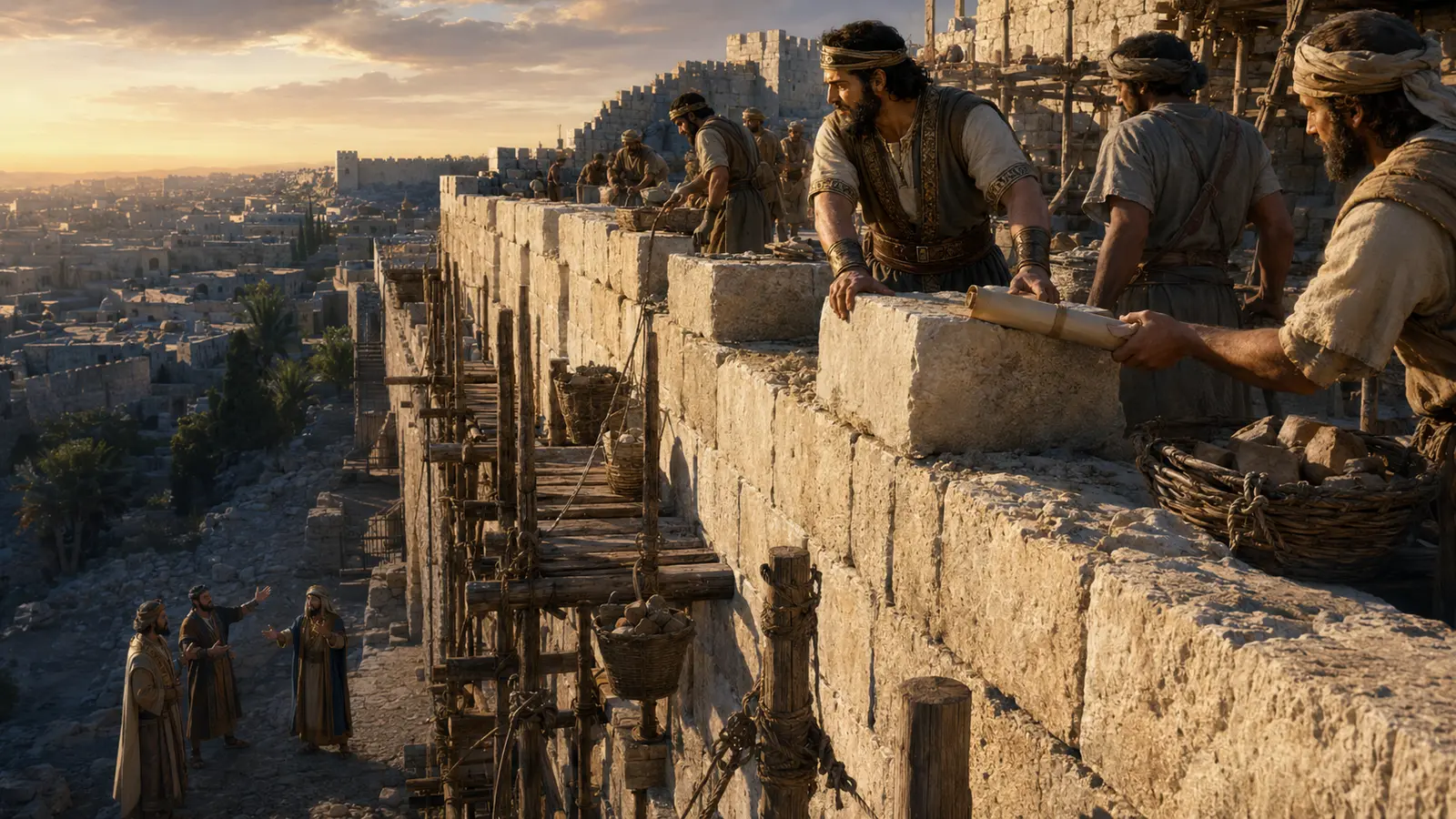
The wall is almost whole, so the battle changes its clothes. Mockery becomes invitation. Threat becomes rumor. False friendship becomes ambush. Prophecy becomes manipulation. Yet the servant stays on the wall, praying with short words and steady hands: “Now, O God, strengthen my hands.”
01
Introduction
There are seasons when opposition no longer attacks the work directly. It becomes clever. It smiles. It invites. It sounds reasonable. It says, “Come, let us meet.” It suggests dialogue, but hides a trap. It speaks the language of concern, but carries the breath of sabotage.
Nehemiah 6 brings us to the final stretch of the wall-building project. The breaches are closed. The wall is nearly complete. Only the doors in the gates remain unfinished [Neh. 6:1]. At precisely this moment, the opposition becomes more subtle. Sanballat, Tobiah, Geshem, and their allies shift from open mockery and threat to deception, slander, intimidation, and spiritual manipulation.
This chapter asks a searching question: How do God’s people remain faithful when the enemy cannot stop the work by force and therefore tries to distract, discredit, and frighten the workers?
This text is about perseverance becoming discernment, because the work of restoration must learn not only how to resist open threats, but also how to refuse deceptive invitations.
Nehemiah 6 is a chapter for everyone who has started rebuilding something under God: a family, a church, a ministry, a habit, a wounded community, a life after failure. When the work nears completion, distraction becomes dangerous. The servant of God must learn when to meet, when to speak, when to stay silent, when to refuse, and when to pray, “Strengthen my hands.”
02
Historical and Literary Context
Nehemiah 6 continues the wall-building narrative that began after Nehemiah’s night inspection of Jerusalem’s ruins [Neh. 2]. Chapter 3 showed the community organized along the wall. Chapter 4 showed external opposition through mockery, threats, and intimidation. Chapter 5 exposed internal injustice among the Jews themselves. Now chapter 6 returns to external opposition, but the form has changed.
The wall is nearly finished. Nehemiah states that no breach remained, though he had not yet set the doors in the gates [Neh. 6:1]. This matters. The enemies are running out of time. They cannot easily stop the wall through ridicule or armed threat, so they attempt to remove or ruin the leader. Their goal is not merely to interrupt construction; it is to weaken the heart, reputation, and courage behind the work.
The chapter unfolds in four movements. First, Sanballat and Geshem repeatedly invite Nehemiah to a meeting in the plain of Ono, intending harm [6:1–4]. Second, Sanballat sends an open letter accusing Nehemiah of rebellion and royal ambition [6:5–9]. Third, Shemaiah offers prophetic-sounding counsel designed to make Nehemiah sin through fear [6:10–14]. Fourth, the wall is completed, the nations lose confidence, but Tobiah’s influence still lingers inside the community [6:15–19].
This chapter fits Ezra–Nehemiah’s wider theme of partial restoration and unresolved tension. The wall is completed, and this is a real achievement. Yet the chapter ends not with pure triumph but with complicated compromise. Tobiah remains connected to powerful families in Judah, and letters continue moving between him and the nobles [Neh. 6:17–19]. The wall is finished, but the community is not yet free from divided loyalties.
Thus Nehemiah 6 celebrates the good hand of God while refusing easy triumphalism. God strengthens the work. The wall stands. The enemies tremble. But the deeper work of covenant faithfulness remains unfinished.
03
Walking Through the Text
When the Enemy Says, “Come Down” [Nehemiah 6:1–4]
Sanballat, Tobiah, Geshem, and the rest of the enemies hear that Nehemiah has rebuilt the wall and that no breach remains [Neh. 6:1]. The unfinished gates mean the city is still vulnerable, but the project is near completion. At this critical moment, they send a message: “Come and let us meet together at Hakkephirim in the plain of Ono” [Neh. 6:2].
The invitation sounds diplomatic. It offers a meeting, perhaps a negotiation. But Nehemiah discerns the hidden intent: “They intended to do me harm” [6:2]. Wisdom is not fooled by polite language when the pattern of hostility is clear.
Nehemiah answers with one of the most memorable statements in the book: “I am doing a great work and I cannot come down. Why should the work stop while I leave it and come down to you?” [6:3].
This is not arrogance. It is focus. Nehemiah understands the difference between necessary conversation and destructive distraction. The wall needs gates. The people need protection. The hour is urgent. He refuses to abandon his assignment for a meeting designed to derail it.
They send the same message four times, and Nehemiah answers in the same way [6:4]. Repetition is part of the test. Many distractions are defeated not by one dramatic refusal, but by consistent obedience repeated again and again.
When Rumor Becomes a Weapon [Nehemiah 6:5–9]
When the private invitation fails, Sanballat changes tactics. He sends a fifth message, this time with an open letter in his hand [Neh. 6:5]. An open letter was not private correspondence. It was designed to be read by others, to spread suspicion, pressure, and fear.
The letter accuses Nehemiah and the Jews of plotting rebellion. It claims that Nehemiah intends to become king and that prophets are ready to proclaim him in Jerusalem [6:6–7]. The accusation is politically explosive. In the Persian empire, rebellion against the king could bring severe consequences. Sanballat is weaponizing imperial fear.
His final line is manipulation disguised as advice: “So now come and let us take counsel together” [6:7]. He creates a false crisis and then offers himself as the solution.
Nehemiah responds clearly: “No such things as you say have been done, for you are inventing them out of your own mind” [6:8]. He names the lie. He does not over-explain. He does not become trapped in endless defense. He sees the goal: “They all wanted to frighten us, thinking, ‘Their hands will drop from the work, and it will not be done’” [6:9].
Then he prays: “But now, O God, strengthen my hands” [6:9].
This prayer is short, but it is enough. In chapter 1, Nehemiah prayed a long covenant prayer. In chapter 2, he prayed quickly before answering the king. Here, in chapter 6, he prays for strength to keep his hands on the work. Prayer has become the breath of leadership.
When Fear Dresses Itself as Prophecy [Nehemiah 6:10–14]
The next test is more dangerous because it sounds spiritual. Nehemiah visits Shemaiah, who is confined at home. Shemaiah says, “Let us meet together in the house of God, within the temple. Let us close the doors of the temple, for they are coming to kill you” [Neh. 6:10].
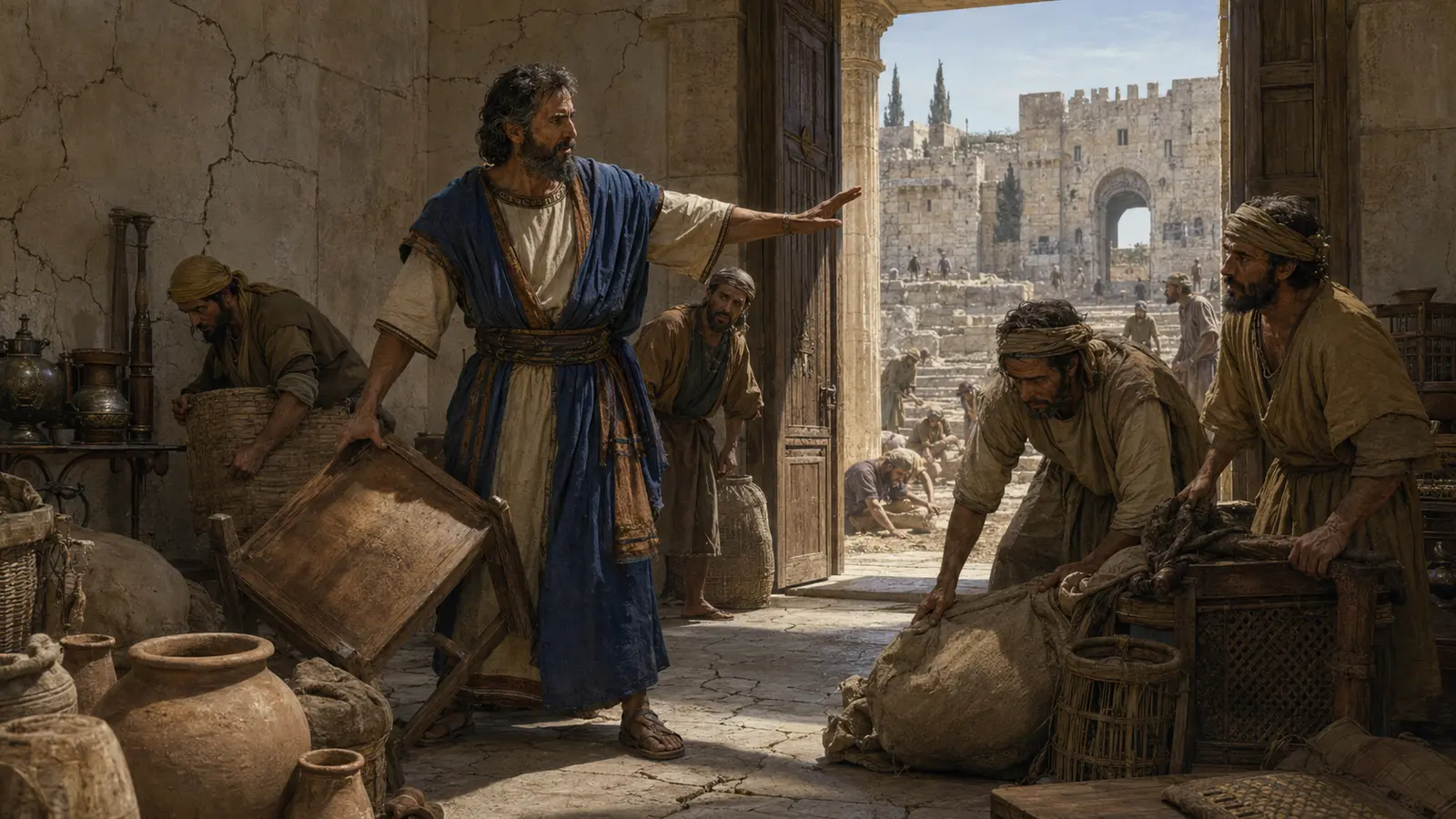
At first, this could sound like protective counsel. It even uses religious space—the temple—as shelter. But Nehemiah discerns that something is wrong. He answers, “Should such a man as I run away? And what man such as I could go into the temple and live? I will not go in” [6:11].
There are likely two issues here. First, Nehemiah refuses cowardice. As the leader of the rebuilding effort, he will not abandon the people in panic. Second, entering the temple improperly would be sin. Nehemiah is not a priest. To hide in the temple would violate sacred boundaries and damage his integrity.
Then he realizes that God had not sent Shemaiah. Tobiah and Sanballat had hired him [6:12]. The purpose was to make Nehemiah afraid, to make him sin, and then to give them a bad name with which to taunt him [6:13].
This is a sobering scene. Not every religious word is from God. Not every prophetic-sounding warning is faithful. Fear can wear sacred clothing. Manipulation can borrow the language of safety. Nehemiah survives because he knows the character of his calling and the boundaries of God’s Word.
He prays again, asking God to remember Tobiah, Sanballat, the prophetess Noadiah, and the other prophets who tried to make him afraid [6:14]. The opposition has now moved into the realm of religious influence. The wall is being built, but spiritual discernment is essential.
When the Wall Is Finished and the Nations Tremble [Nehemiah 6:15–16]
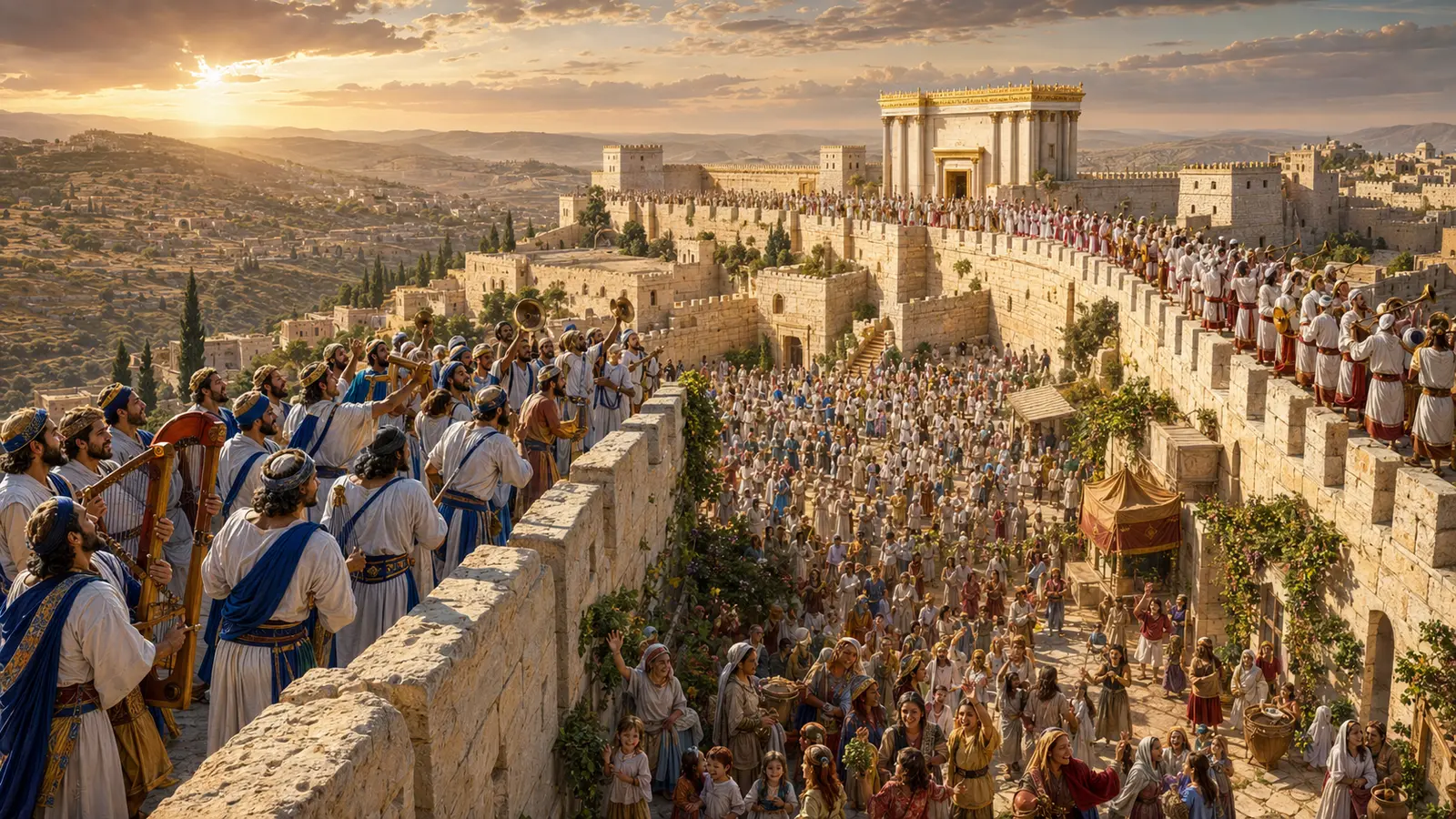
At last, the wall is finished on the twenty-fifth day of Elul, in fifty-two days [Neh. 6:15]. The speed is remarkable. A city long exposed now has its boundary repaired. The disgrace named in chapter 1 begins to lift.
When the enemies and surrounding nations hear of it, they are afraid and fall greatly in their own esteem [6:16]. The same enemies who tried to frighten the builders are now themselves afraid. Why? “They perceived that this work had been accomplished with the help of our God” [6:16].
This is the theological center of the victory. The wall is not merely evidence of Nehemiah’s leadership or the people’s labor. It is evidence of God’s help. The nations may not worship Israel’s God, but they recognize that something beyond human ability has happened.
Yet even this moment is not the final restoration. The wall is complete, but the story continues. The people still need Scripture, confession, covenant renewal, and deeper obedience.
When the Wall Stands but Compromise Still Writes Letters [Nehemiah 6:17–19]
The chapter ends unexpectedly. Instead of stopping with triumph, it tells us that the nobles of Judah are sending many letters to Tobiah, and Tobiah’s letters are coming to them [Neh. 6:17]. Tobiah is connected by marriage to influential Jewish families [6:18]. The nobles speak of his good deeds to Nehemiah and report Nehemiah’s words back to him. Tobiah continues sending letters to make Nehemiah afraid [6:19].
This ending is crucial. The wall stands, but influence networks remain compromised. The enemy is not only outside the gates; he has relationships inside the community. Family ties, social status, political convenience, and divided loyalties continue to threaten covenant faithfulness.
Ezra–Nehemiah repeatedly refuses neat endings. The temple can be rebuilt and still lack glory. The wall can be completed and still surround a people needing inner renewal. The visible project succeeds, but the heart of the community remains contested ground.
04
Theological Reflection
Discernment Is Essential to Restoration
Nehemiah 6 teaches that rebuilding requires more than energy. It requires discernment. The enemy does not always appear with open hostility. Sometimes he appears through invitations, rumors, advice, spiritual language, and influential relationships.
Discernment asks: Does this invitation serve the work God has given? Does this counsel align with God’s Word? Does this warning produce faithful courage or sinful fear? Does this relationship strengthen obedience or weaken loyalty?
Fear Often Aims at the Hands
Sanballat’s goal is clear: “Their hands will drop from the work” [Neh. 6:9]. Fear wants to loosen obedience. It wants builders to stop, leaders to hide, communities to turn against one another, and God’s work to remain unfinished.
Nehemiah’s prayer is therefore exact: “Strengthen my hands.” He does not ask for a life without enemies. He asks for strength to continue the assignment.
Not Every Religious Voice Is Faithful
Shemaiah’s counsel sounds urgent and spiritual, but it is false. This is one of the chapter’s strongest warnings. Spiritual language can be used to manipulate. A message can mention the temple and still not come from God.
The people of God must test counsel by Scripture, character, fruit, and faithfulness to God’s calling [Deut. 13:1–5; Jer. 23:16–22; 1 John 4:1]. Fear is not automatically wisdom because it sounds religious.
Completion Is Real, but Not Final
The wall is finished in fifty-two days. This is genuine victory. God has helped his people. Their shame is answered. Their enemies are humbled. Yet the closing verses remind us that visible completion does not mean total transformation.
This is one of Ezra–Nehemiah’s central theological tensions. The city can be rebuilt, but the community still needs renewed hearts. The wall may close the breaches in stone, but it cannot close the breaches of divided loyalty. Only deeper covenant renewal can address that.
The story therefore points forward to a greater builder. Jesus does not merely repair walls; he creates a new people. He does not merely protect a city; he becomes the presence of God among his people. He does not merely expose false shepherds; he lays down his life for the sheep and gives the Spirit who writes the law on the heart [John 10:11; Jer. 31:31–34; Eph. 2:19–22].
05
Life Application
Do not come down from the work God has given you. Some invitations are distractions, even when they sound reasonable.
Recognize repeated pressure. When the same pull keeps returning, ask whether it is calling you to faithfulness or draining your obedience.
Name lies without becoming trapped by them. Nehemiah answered slander clearly but did not allow rumor to control his mission.
Pray for strengthened hands. When fear rises, ask God not only to remove pressure, but to steady your obedience.
Test spiritual counsel. Not every urgent religious word is from God. Measure counsel by Scripture, humility, truth, and the fruit it produces.
Refuse fear-based compromise. Fear may promise safety, but it often leads to sin and loss of integrity.
Celebrate completion, but keep watch over the heart. A project may succeed while hidden loyalties still need reform.
06
Reflection Questions
1. What “meeting in Ono” is tempting you to come down from the work God has assigned to you?
2. What rumors, accusations, or fears are trying to make your hands drop from obedience?
3. Where do you need to pray, “Now, O God, strengthen my hands”?
4. What spiritual-sounding advice in your life needs to be tested more carefully by Scripture and wisdom?
5. What visible progress have you celebrated while still needing to address hidden compromise or divided loyalty?
07
Response Prayer
Lord God of heaven, helper of your servants, strengthen our hands.
When distraction calls our name, keep us faithful on the wall. When slander spreads like dust in the wind, anchor us in truth. When fear dresses itself as wisdom, give us discernment. When false counsel borrows holy language, teach us to know your voice.
Forgive us for the times we came down too quickly, answered every accusation too anxiously, or hid in places you never called us to enter.
Make us steady without becoming proud. Make us courageous without becoming harsh. Make us watchful without becoming suspicious. Make us faithful until the work you have assigned is complete.
And when the wall stands, do not let us mistake completion for transformation. Search our loyalties. Heal our divisions. Renew our hearts. Build us into a people whose strength is not stone, but your presence among us.
Through Jesus Christ, the cornerstone, the faithful witness, and the builder of the new creation, Amen.
08
Window into What Comes Next
Nehemiah 6 ends with the wall completed, but the story is not finished. The city now has repaired boundaries, yet its population is still small and its spiritual life still needs ordering. In Nehemiah 7, the completed wall leads to gates, guards, singers, Levites, and the gathering of the people by genealogy.
The movement continues: discernment protects the work, completion opens the city, and the rebuilt city must now become a reordered community.
The wall stands—but who will live within it, and what kind of people will they become?
09
Bibliography
Boda, Mark J. Praying the Tradition: The Origin and Use of Tradition in Nehemiah 9. Berlin: de Gruyter, 1999.
Clines, David J. A. Ezra, Nehemiah, Esther. New Century Bible Commentary. Grand Rapids: Eerdmans, 1984.
Kidner, Derek. Ezra and Nehemiah. Tyndale Old Testament Commentaries. Downers Grove: InterVarsity Press, 1979.
Throntveit, Mark A. Ezra-Nehemiah. Interpretation. Louisville: John Knox Press, 1992.
Williamson, H. G. M. Ezra, Nehemiah. Word Biblical Commentary 16. Waco: Word Books, 1985.
Williamson, H. G. M. Ezra and Nehemiah. Old Testament Guides. Sheffield: JSOT Press, 1987.
Yamauchi, Edwin M. “Ezra-Nehemiah.” In The Expositor’s Bible Commentary, revised edition. Grand Rapids: Zondervan, 2010.
Be the first to leave a comment.