

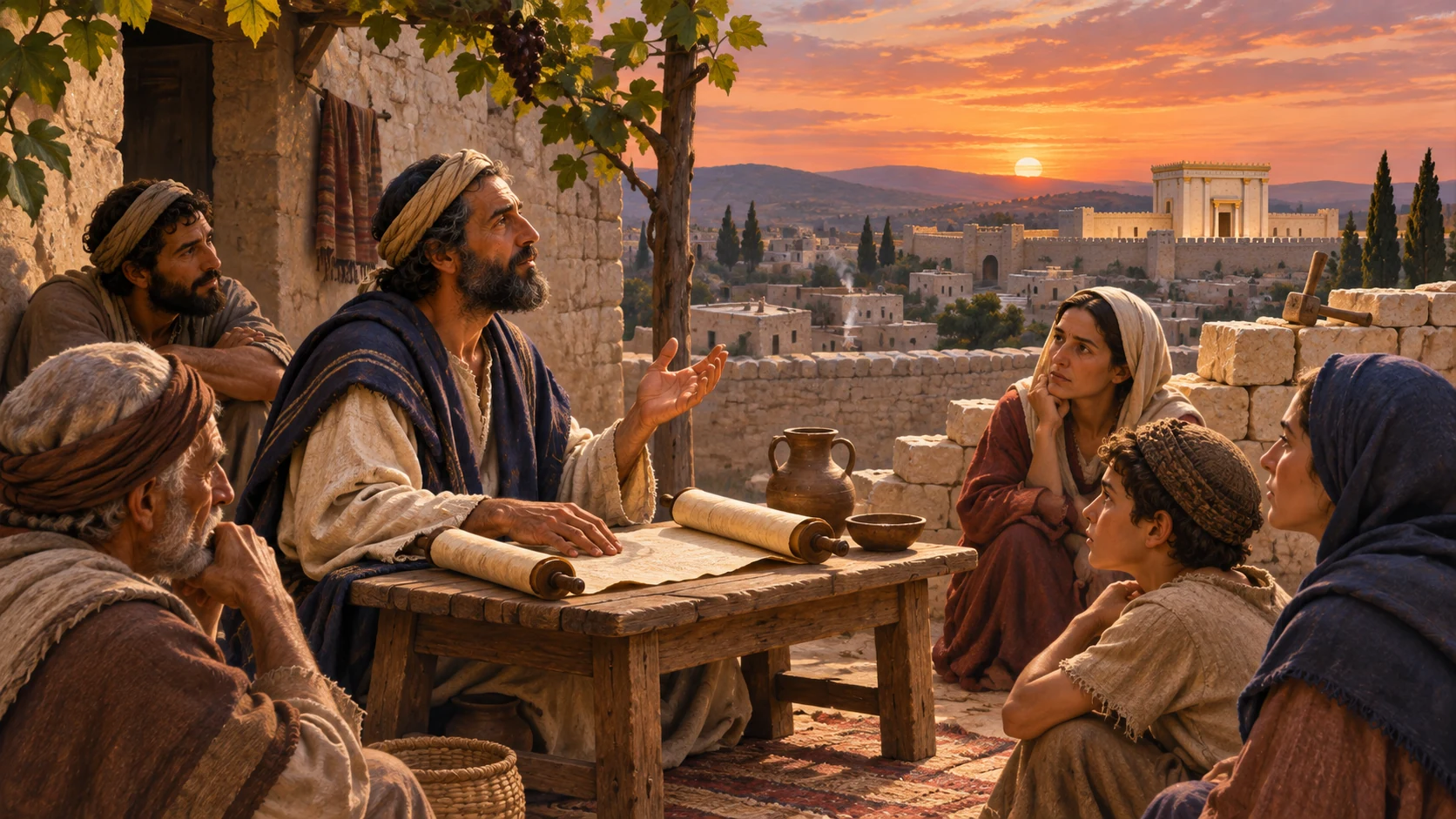
How can a completed temple reveal a community’s continuing need for renewal?
Opening passages
Read Ezra 6:19–22; 7:10; 9:8–9; 10:1–4. Passover, a commitment to learning, and confession hold restoration’s joy alongside unfinished responsibility.
Introduction: Voices after Construction
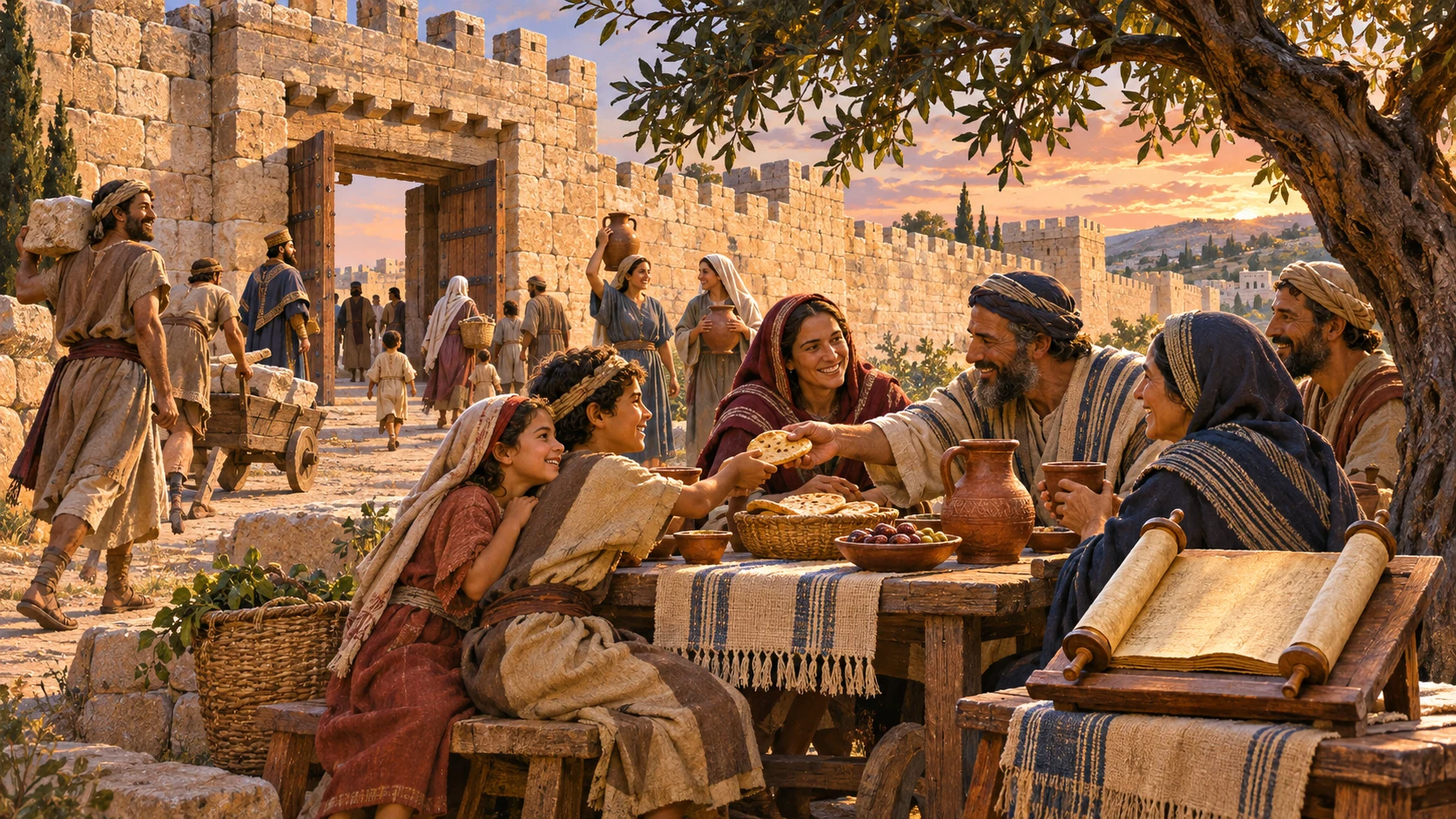
After a roof has been finished and the builders have departed, a home raises fresh questions. How will conversation unfold at the table? How will bread be shared? How will distress receive a hearing? Architectural completion cannot answer every question concerning life within a house.
Ezra closes after return, rebuilding, worship, travel, and confession. The temple stands, yet the narrative supplies no picture of a community free from difficulty. Chapter ten leaves family names and the cost of reform before the reader. Hope requires truth alongside compassion.
Mercy Opens a Door and Creates Responsibility
Cyrus announces permission, temple vessels return, and a community responds (Ezra 1–2). The narrative directs attention toward God’s faithfulness amid imperial power. Blessing does not remove the work of gathering, traveling, and accepting responsibility.
Names and offerings reveal restoration involving actual people. Ministry cannot be measured through buildings or funds alone. Ezra remembers families, servants, and contributors. A community needs a memory broad enough to honor less visible service.
Altar, Tears, and Work Awakened
Ezra 3 portrays worship before the whole project is finished. Older participants weep while other voices celebrate. The narrative preserves differing responses. Remembrance of loss and gratitude for mercy can occupy the same gathering.
Opposition in chapter four does not end the story. Haggai and Zechariah minister, work resumes, and royal records support rebuilding (Ezra 5–6). Temple dedication and Passover follow. The story joins prophetic speech, workers’ hands, and public procedures within restoration.
Prayer does not make preparation unspiritual. Ezra 8 places fasting beside weighing, entrusting, and receiving treasure. Confidence in God’s good hand accompanies inspectable faithfulness. Ministry resources require responsible people, records, and clear handovers.
Torah Entering Ordinary Life
Ezra 7:10 holds study, practice, and teaching together. Leadership needs more than accurate information. Character, financial integrity, and the use of authority reveal Scripture’s place within a teacher’s life.
Within covenant, instruction belongs to daily life. Ezra’s confession names a history of wrongdoing and mercy without turning the community into the source of salvation. Mercy awakens responsibility; responsibility cannot become a purchase price for mercy.
The completed temple therefore remains a beginning. Public worship requires communities shaped through sustained learning and accountable action after the dedication has ended.
The Difficult Ending: Remembering Wives and Children
Ezra 10 records a proposal to remove foreign wives and children, communal commitment, and investigation of cases. The text supplies no complete account of later life for every family. Faithful reading preserves the narrative’s silences alongside the gravity of suffering.
Covenant concerns require attention to the language of abominations in chapter nine and Scripture’s wider witness. Ruth the Moabite enters David’s family story; Isaiah 56:3–8 opens hope for foreigners holding fast to the Lord. Nationality and language cannot provide a simple scale of human worth.
For Christian pastoral practice, 1 Corinthians 7:12–16 prevents using Ezra as a universal command to dissolve marriages across differences of faith. Context, protection of vulnerable people, and respectful care belong beside interpretation. A difficult passage calls for humility and careful judgment concerning the costs borne by actual households.
A Window of Hope: From Ezra toward Christ
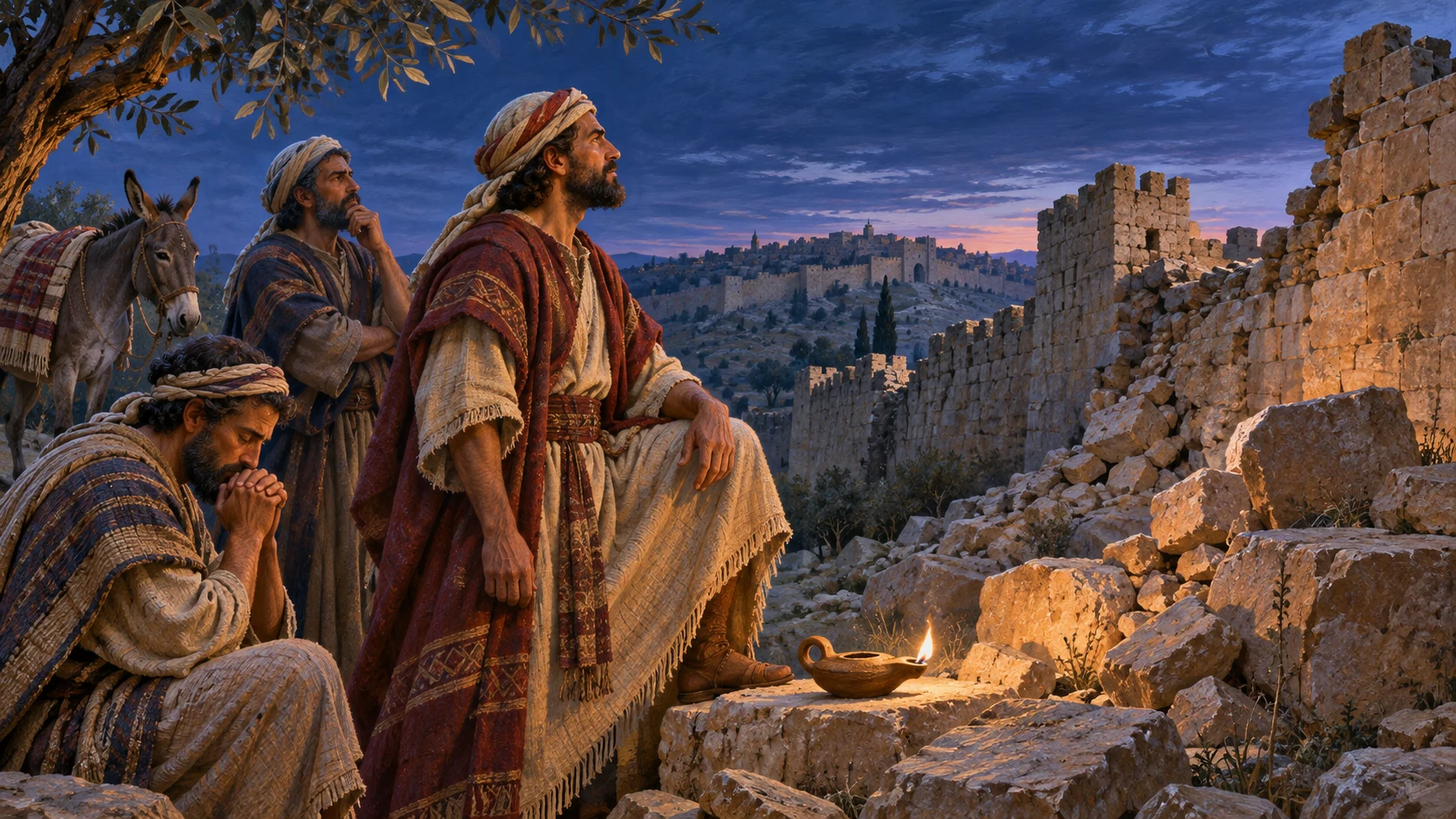
Ezra ends before the questions of restoration have ended. Nehemiah continues the story of city, justice, Torah, and covenant. Return has begun; communal life still requires deeper renewal.
Within Christian reading, Jesus connects divine presence with resurrection (John 2:19–22). Ephesians 2:11–22 pictures Jews and Gentiles becoming God’s household in Christ. Hope takes communal form through hearing Scripture, practicing justice, and making room for service.
The conclusion honors the reality of rebuilt worship while leaving room for unanswered questions. A finished sanctuary cannot replace faithful relationships. God’s mercy invites continuing formation in ordinary life.
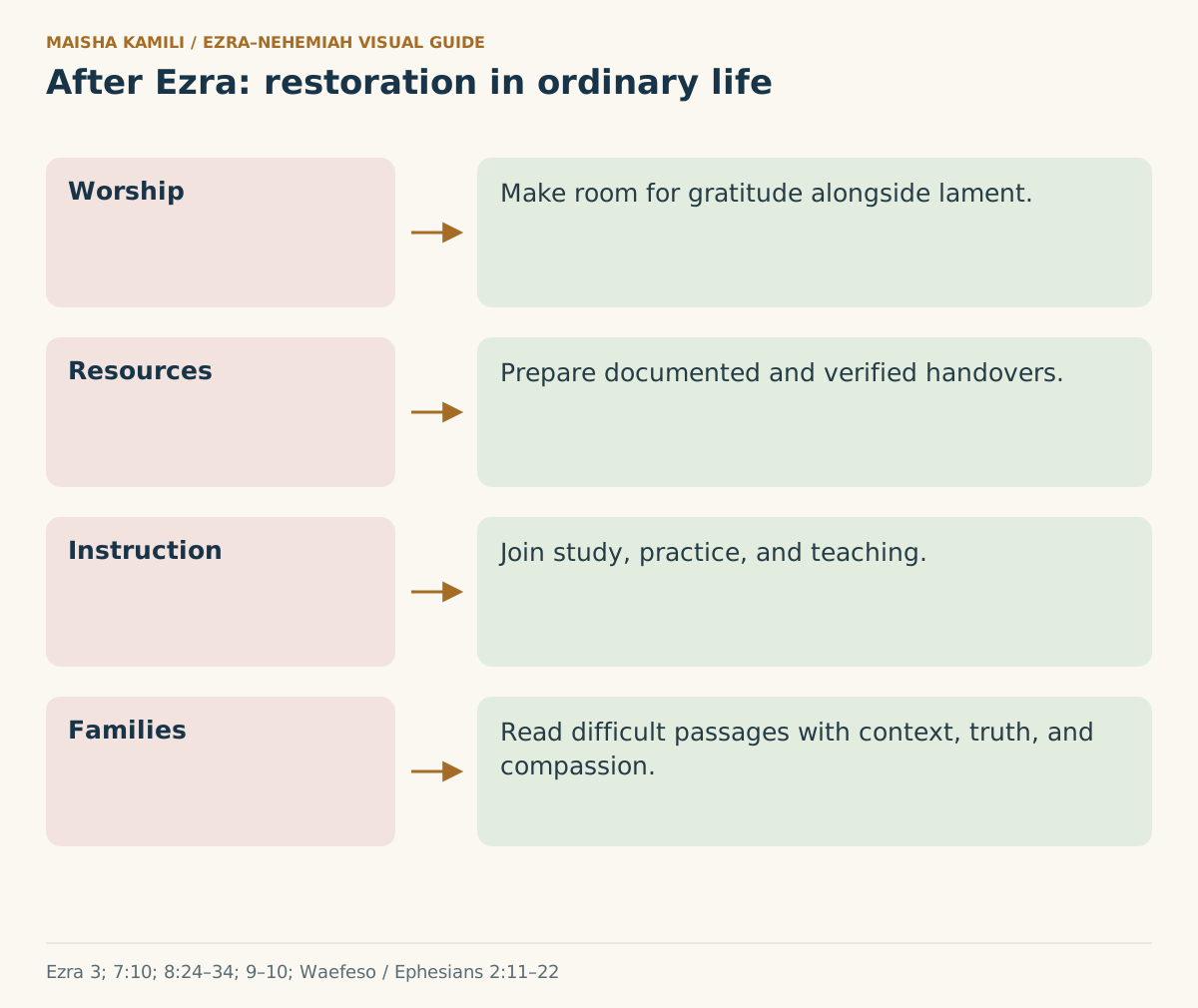
Visual reflection: How can communal life illuminate the meaning of a project’s success?
Life Application
- Assess ministry through communal life. Compare a building project with evidence of learning, justice, and practical care.
- Make accountability visible. Use Ezra 8 to plan a recorded and verified financial handover.
- Read difficult passages together. Discuss Ezra 9–10 alongside Ruth 1 and 1 Corinthians 7:12–16, preserving questions and family dignity.
Reflection Questions
- How can mercy awaken responsibility without becoming a transaction?
- How can worship make room for tears alongside gratitude?
- How does Ezra 8 join faith and accountability?
- How does Ezra’s ending raise questions about the cost of reform?
- How can God’s household in Ephesians 2 illuminate communal ministry?
Response Prayer
God of covenant, let mercy bear the fruit of faithfulness. Let Scripture bring light to finances, relationships, and authority. Jesus Christ, form a community of justice and compassion. Holy Spirit, continue renewal after construction celebrations have ended. Amen.
The Journey Continues
Return to the Ezra introduction for the reading map. Continue with the Nehemiah introduction for the next stage.
Bibliography
- The Bible. Ezra 1–10; Ruth 1; Isaiah 56:3–8; John 2:19–22; Ephesians 2:11–22; 1 Corinthians 7:12–16.
- World English Bible, Classic. Ezra 8 and Ezra 10. Public-domain Scripture.
- United States Conference of Catholic Bishops. Introduction to Ezra. Structure and restoration setting.
Be the first to leave a comment.