

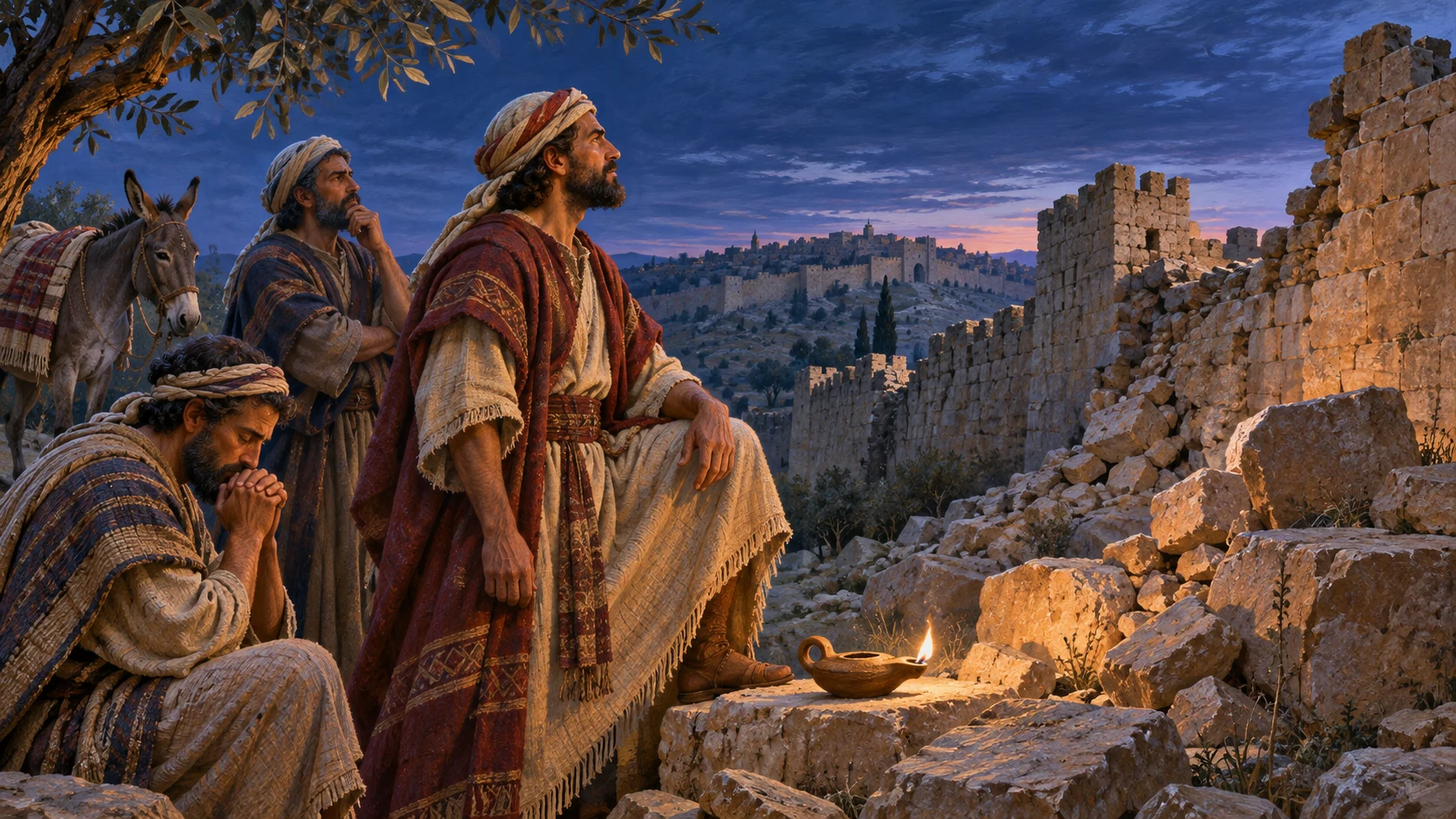
How can a wall protect a city while Scripture and justice rebuild communal life?
Opening passages
Read Nehemiah 1:3–4; 2:17–18; 8:8–12. News of disgrace leads toward prayer, an invitation to build, and eventually understanding Torah. Stonework enters the wider story of communal life.
Introduction: A Wall and a Neighbor’s Voice
A house can have strong walls while a family struggles to speak peacefully. A ministry building can shine while a worker carries debt and exhaustion. Visible achievement requires a second question: how are people actually living?
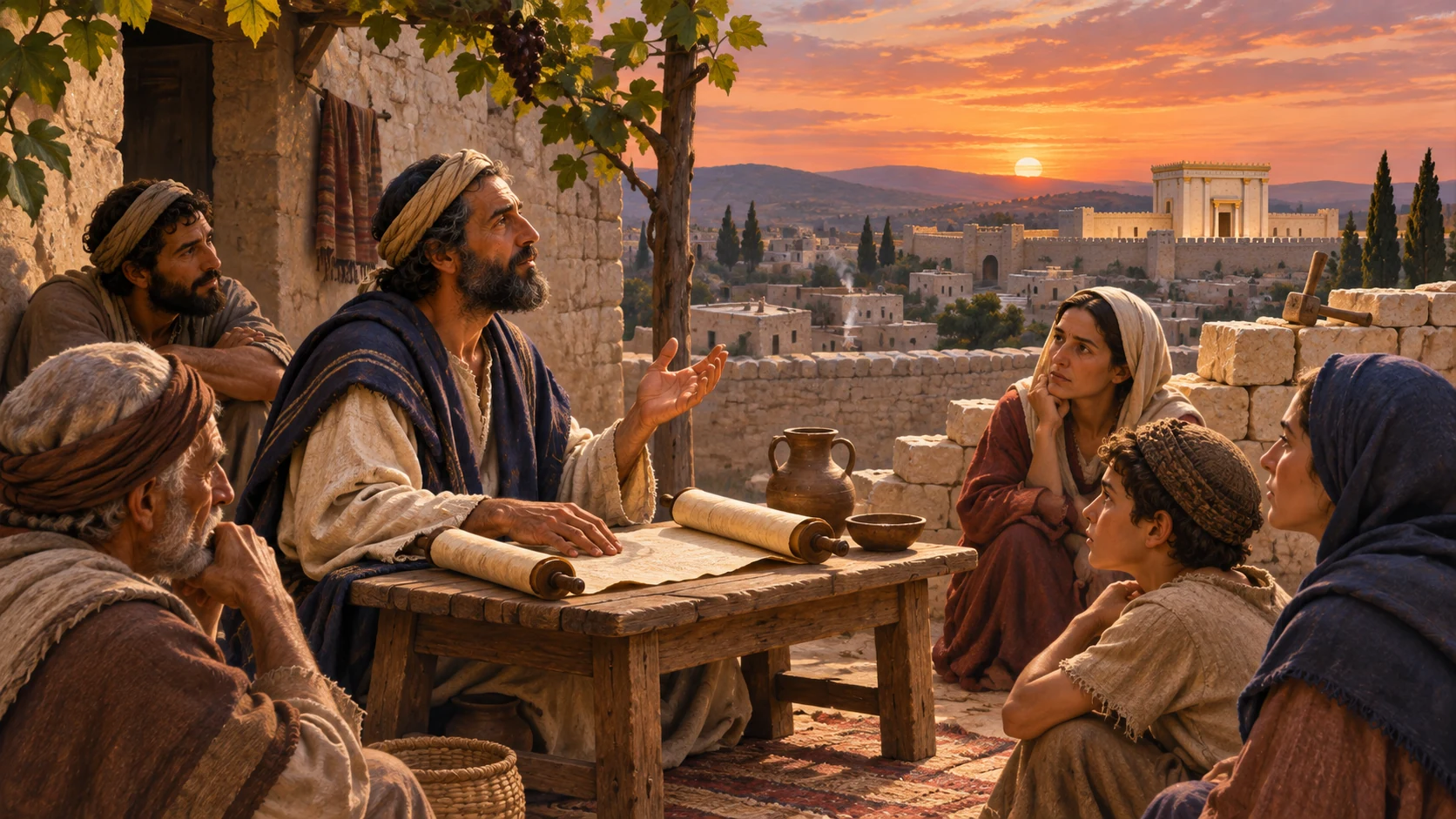
Nehemiah begins with news of Jerusalem’s broken wall and burned gates. Nehemiah weeps and prays. The narrative then moves beyond masonry. The cry of poor households in chapter five and the opened scroll in chapter eight enlarge the meaning of rebuilding.
The thirteen chapter studies follow prayer, planning, labor, justice, instruction, and covenant. The introduction offers a reading map without reducing Nehemiah to techniques for rapid success.
Setting: From Susa toward Jerusalem
Nehemiah serves as cupbearer at the Persian royal residence in Susa (1:1, 11). In Artaxerxes’ twentieth year, Nehemiah receives permission to travel to Jerusalem, letters for the journey, and access to timber (2:1–9). Conventional chronology places the journey around 445/444 BCE.
The temple has already been rebuilt in Ezra 6. Nehemiah leads repairs to the city wall and communal life. Nehemiah later recalls twelve years of governorship before returning to the king (5:14; 13:6). The guide’s dates are historical approximations, with continuing discussion concerning some relationships between Ezra and Nehemiah.
The regional map locates Jerusalem, Babylon, and Susa approximately. Scripture does not identify every travel stop. The geographic guide supplies orientation rather than a verified itinerary for every stage.
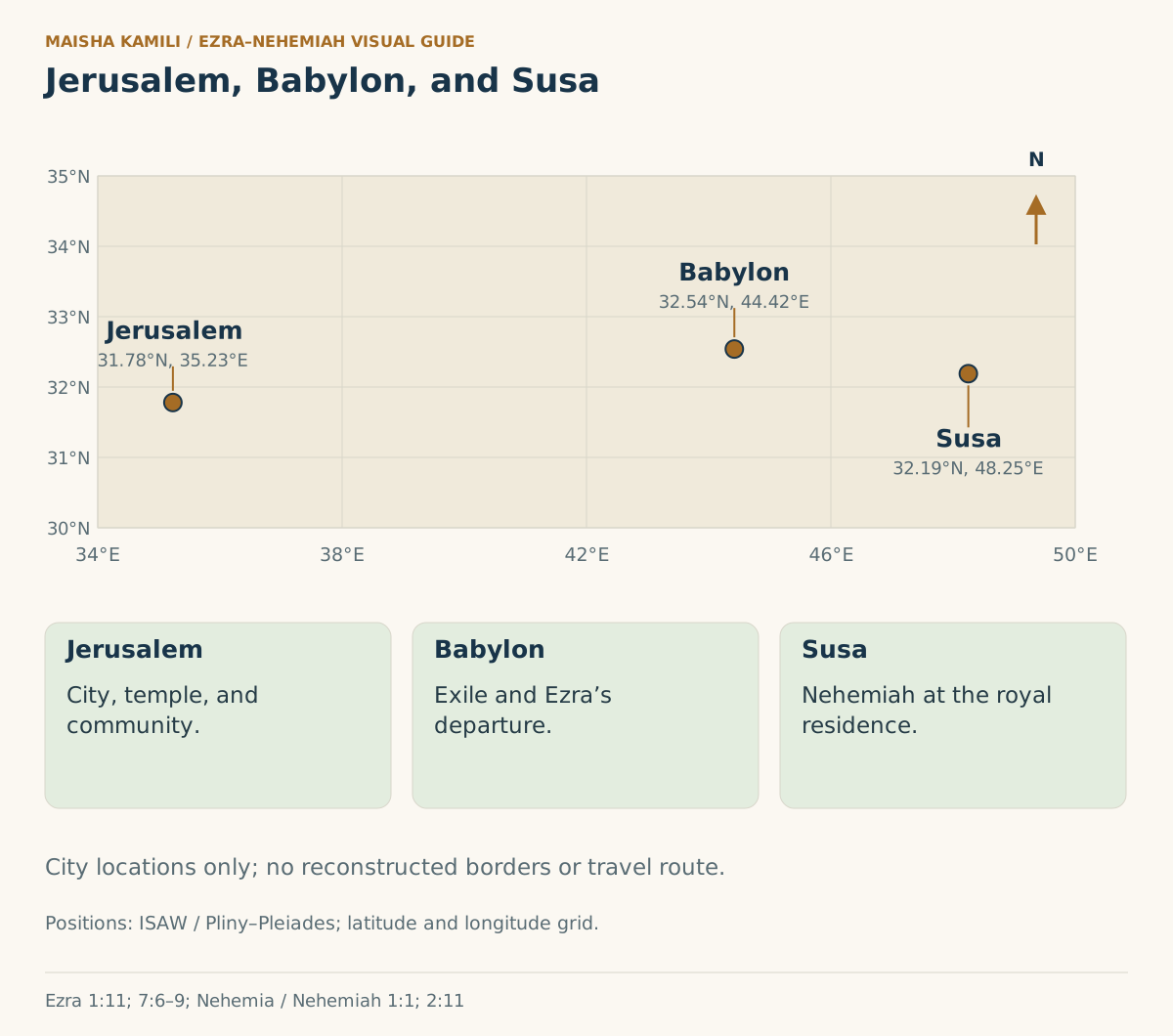
Visual reflection: How does regional distance deepen understanding of the community’s journey?
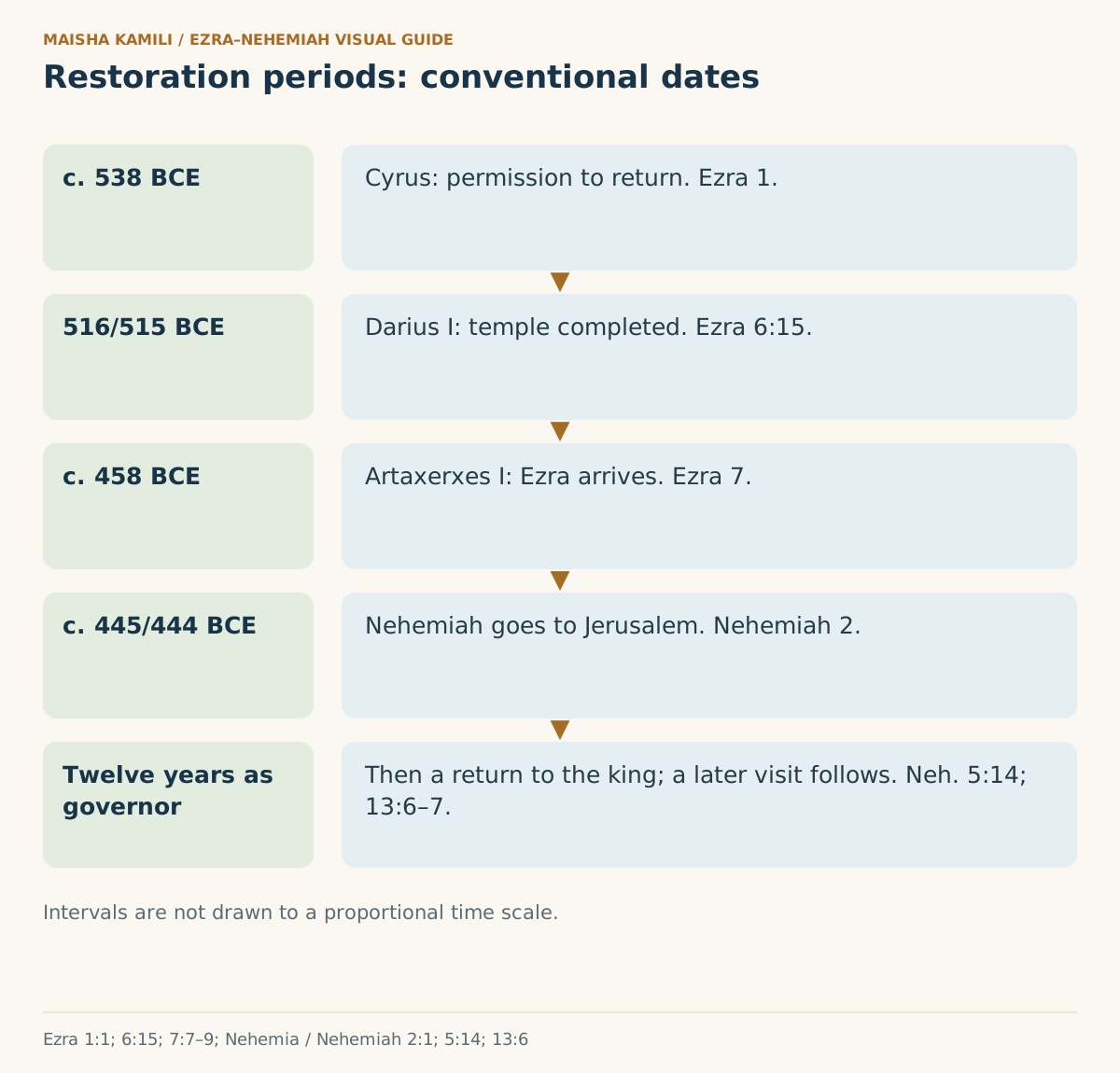
Visual reflection: How do the long intervals between restoration’s stages illuminate patience?
A Reading Map of Thirteen Chapters
Nehemiah 1–2 connects news, confession, a royal request, nighttime assessment, and an invitation to build. Chapters 3–6 introduce workers, opposition, threats, economic exploitation, and completion of the wall. The fifty-two days in 6:15 concern wall construction; the whole book covers a longer period.
Chapter seven addresses leadership, security, and the community register. Chapters eight through ten center Torah, explanation, joy, confession, and covenant commitments. Chapters eleven and twelve describe settlement, service, and thanksgiving choirs. Chapter thirteen brings later problems concerning temple support, Sabbath, and covenant loyalty.
Ezra and Nehemiah belong together within the restoration narrative. The chapter sequence also respects each book’s distinctive contribution. Reading links proceed from introduction through chapters one to thirteen and then the conclusion.
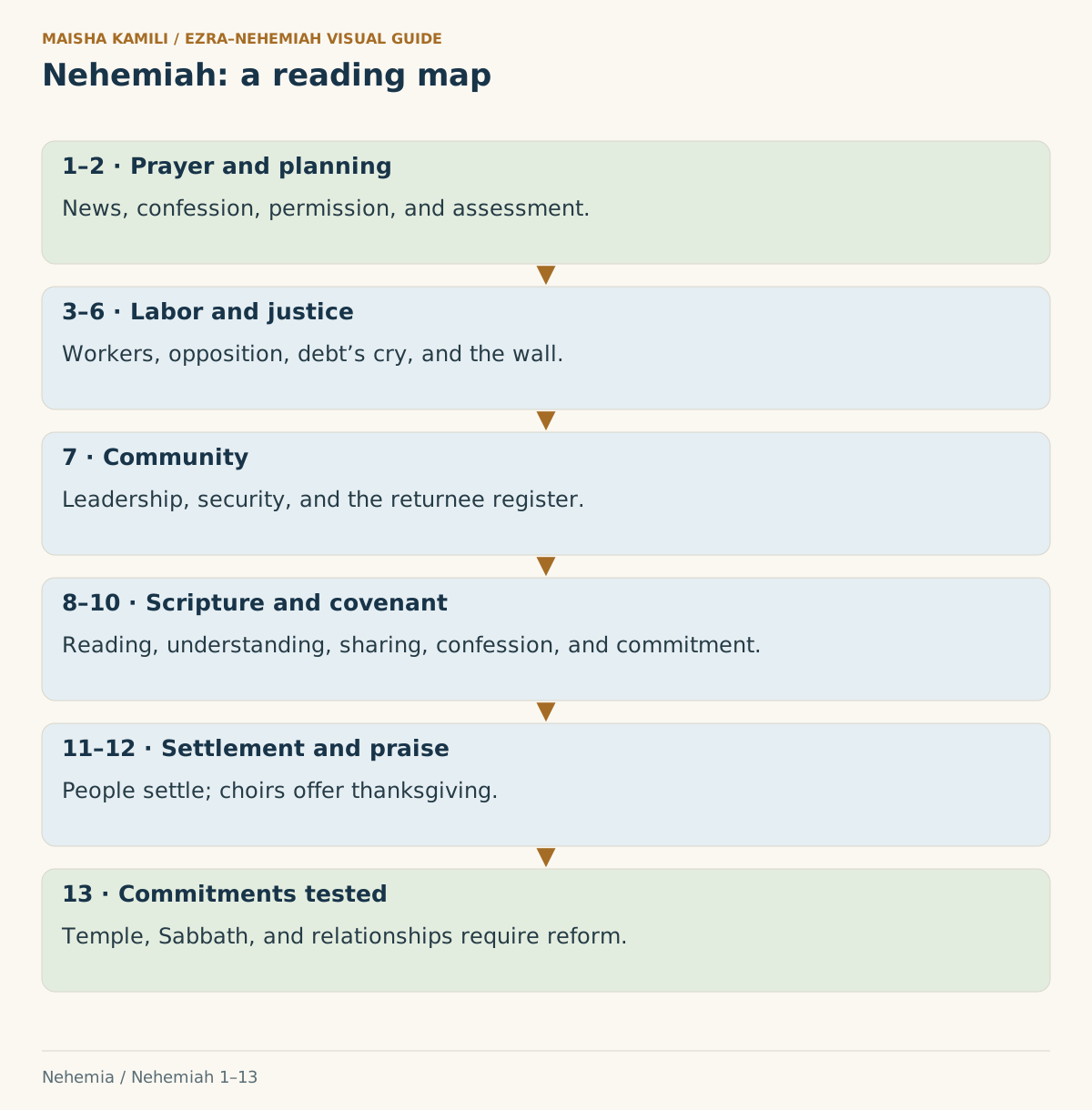
Visual reflection: How does the movement from wall to Torah enlarge restoration’s meaning?
Shared Labor and Justice within the Walls
Nehemiah 3 names priests, artisans, officials, families, and Shallum’s daughters within the work (3:12). Repeated references to adjoining sections turn a list into a picture of cooperation. The gate diagram follows textual sequence; some site identifications and the extent of Persian-period walls remain debated.
Chapters four and six confront mockery, fear, and manipulation. Chapter five interrupts the construction story to hear hunger, debt, and the enslavement of children. Danger also exists within the community. Internal exploitation requires practical correction, public accountability, and restitution.
Scripture, Joy, and Accountable Commitments
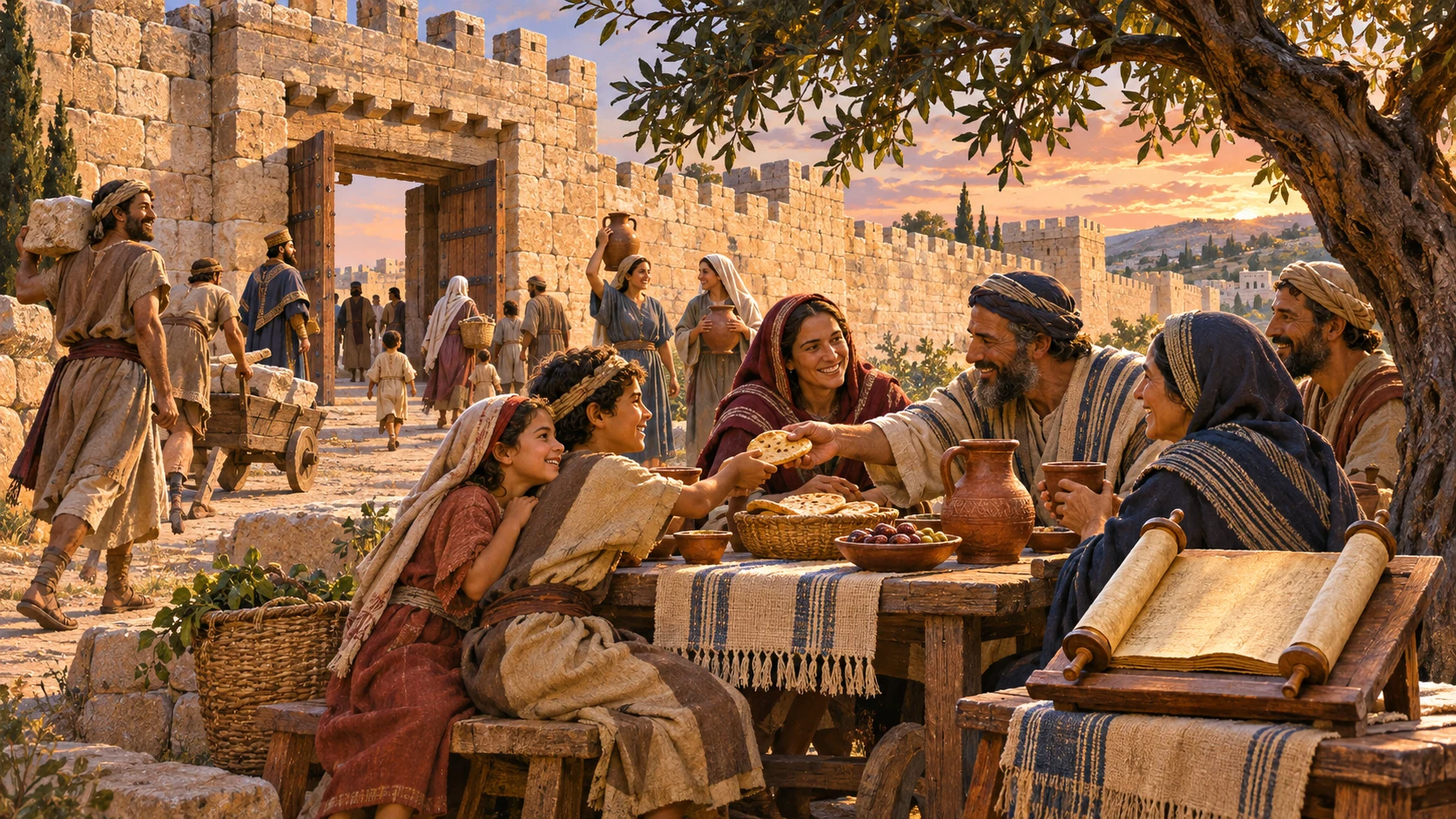
In Nehemiah 8, public reading accompanies explanation enabling understanding. Tears also give way to celebration and shared food. Understanding Scripture reaches the table alongside the mind.
Chapter nine remembers creation, Abraham, exodus, rebellion, and mercy. The community acknowledges subjection within a fruitful land (9:36–37). Return has not removed every shadow of exile. Chapter ten expresses commitment through Sabbath, debt, relationships, and temple support; chapter thirteen later exposes the fragility of the promises.
Reading Leadership in Christ’s Light
Nehemiah displays prayer, planning, and courage alongside actions requiring evaluation. Nehemiah 13:25 describes beating and pulling out hair. Recording an action in Scripture supplies no permission for violence in church or family leadership.
Jesus teaches leadership through service in Mark 10:42–45. Ephesians 2:11–22 pictures Jews and Gentiles forming God’s household in Christ. Christian reading values communal protection while assessing authority through service, justice, and compassion.
A responsible reading can therefore learn from Nehemiah’s diligence without turning every narrated decision into a universal leadership command. The book’s unresolved ending leaves room for deeper formation.
Life Application
- Listen before planning. Gather reliable information concerning a community’s actual needs before announcing a project.
- Examine justice within the work. Review wages, debt, and vulnerable participants through Nehemiah 5.
- Teach toward understanding. Plan a short reading, explanation, and act of sharing through Nehemiah 8.
Reflection Questions
- How can prayer reshape entry into repair work?
- How does the fifty-two-day statement differ from the book’s overall timespan?
- How does the cry in Nehemiah 5 reorder leadership priorities?
- How can reading and explaining Scripture reach a neighbor’s table?
- How does Jesus’ leadership guide evaluation of earlier leaders’ actions?
Response Prayer
God of mercy, let prayer open listening before planning. Let workers receive dignity, hungry households receive bread, and Scripture be taught with clarity. Lord Jesus Christ, form leaders with a servant’s heart. Holy Spirit, strengthen communal faithfulness. Amen.
A Window toward Chapter One
Begin with the Nehemiah 1 study. Follow all thirteen chapters and the conclusion; revisit the Ezra introduction for the return and temple setting.
Bibliography
- The Bible. Nehemiah 1–13; Ezra 6; Mark 10:42–45; Ephesians 2:11–22.
- World English Bible, Classic. Nehemiah. Public-domain Scripture.
- United States Conference of Catholic Bishops. Introduction to Nehemiah and Nehemiah 1 notes. Persian setting and conventional chronology.
Be the first to leave a comment.