


When the wicked prosper, what can keep our faith from falling?
01
Overview
From the pain of comparison to the goodness of being near God
“Nevertheless, I am continually with you. You have held my right hand.” Psalm 73:23, World English Bible
Someone takes a crooked shortcut and arrives ahead of those who stayed on the right road. Another person refuses to harm a neighbor and wakes to another difficult day. Psalm 73 gives voice to the question that can rise between them: does faithfulness matter when wrongdoing seems to work?
02
1.0 Introduction
Some struggles begin with what we see. A dishonest person gains influence. Someone who exploits others lives comfortably. Meanwhile, a person trying to remain faithful carries burdens that return each morning.
Psalm 73 takes this uneven world seriously. Its worshiper admits that the prosperity of the wicked awakened envy and nearly unsettled his life with God. The question about justice has become personal: has keeping his heart clean been a wasted effort?
The answer unfolds through a painful journey into God’s presence. The singer recovers confidence that evil has an end and discovers that God has continued to hold him. His circumstances have not been narrated as suddenly repaired, but his understanding of them changes. The psalm moves from envy and threatened faith toward renewed trust in God’s justice and sustaining presence, teaching us to seek our security in the God who holds us rather than in the apparent success of wrongdoing.
03
2.0 Historical and Literary Context
Psalm 73 opens Book Three of the Psalter, Psalms 73–89. Its heading associates it with Asaph, whose name also heads Psalm 50 and Psalms 74–83. Israel’s worship tradition connects Asaph with its musicians, but the heading alone cannot establish this poem’s date or a particular historical crisis (1 Chronicles 25:1; Kidner 2014, 287).
Book Three gives considerable space to communal distress and questions about God’s covenant faithfulness. Psalm 73 stands at its entrance as a personal struggle with implications for the community. After Psalm 72’s prayer for a ruler who ends oppression, we now encounter a world where oppressors seem to enjoy peace (BibleProject, n.d., 14–15; Goldingay 2007, 417–19).
The poem combines wisdom, lament, testimony, and trust. It begins with the conviction reached at the end of its journey, then recalls the crisis through which that conviction was tested. The sanctuary in verse 17 marks the decisive turn.
Repeated references to the heart trace the inner struggle. The word good frames the poem in verses 1 and 28, while slipping feet, a held hand, and God as the heart’s strength show how the worshiper finds firmer ground.
04
3.0 Walking Through the Text
3.1 An honest confession beneath a confident opening
Psalm 73:1–3
The opening affirms God’s goodness to Israel and to those whose hearts are pure. This is the testimony of someone whose trust has passed through a crisis. The next verse immediately admits how close he came to losing his footing.
He names envy as the danger. The prosperity of arrogant people had become the measure against which he assessed his own life. Their visible success made their way of living appear attractive.
A pure heart here concerns sincere allegiance to God. The psalm will show how that allegiance can be strained by resentment and comparison. By telling the truth about his envy, the worshiper begins to uncover what almost drew him onto another path (Kidner 2014, 288; Goldingay 2007, 401–3).
3.2 A world that seems to reward cruelty
Psalm 73:4–12
The wicked appear healthy, secure, and sheltered from ordinary troubles. Pride hangs around their necks like an ornament; violence becomes their clothing. Their speech threatens others and seems to reach everywhere.
The concern is moral. These people use their position to intimidate and oppress, then question whether God takes notice. Wealth joined to cruelty appears to flourish without accountability.
Verse 10 is difficult. Kidner discusses the common reading in which people gather around the successful and absorb their influence. Goldingay reads the imagery as God’s people enduring repeated blows and drinking deep distress. Both readings expose the social weight of the scene, though they describe different effects (Kidner 2014, 289; Goldingay 2007, 406).
The picture is voiced from within the worshiper’s crisis. It expresses the scandal of apparent impunity, not a claim that every wrongdoer always enjoys an easy life. Envy has fixed his attention on success that seems beyond challenge.
3.3 When faithfulness feels wasted
Psalm 73:13–16
The worshiper wonders whether cleansing his heart and keeping his hands innocent have accomplished anything. Each morning brings renewed affliction. The contrast between their ease and his pain makes obedience seem futile.
The language recalls the clean hands and pure heart of Psalm 24:3–4. He has tried to live faithfully, yet the expected correspondence between righteousness and well-being seems broken. This is a wounded person’s struggle with the meaning of his life.
Verse 15 introduces responsibility toward God’s children. Publicly declaring faithfulness pointless would betray the community to which he belongs. This restraint should help us care for others while we wrestle; the psalm’s own openness shows that such care can include honest speech about doubt.
He continues seeking understanding. The burden is real, and remembering his neighbors does not immediately answer it. Yet their relationship with him interrupts the isolation of comparison (Goldingay 2007, 407–9).
3.4 The sanctuary opens the longer story
Psalm 73:17–20
Entering God’s sanctuary changes the horizon. The worshiper considers where the life of the wicked is heading. Their present success no longer tells the whole story.
The psalm does not describe exactly how this recognition came: through worship, reflection, or conversation. What matters is the renewed conviction gained there. God will act, and the impressive power of the wicked will prove fragile (Goldingay 2007, 409–11).
In the familiar translation of verse 18, the slippery ground now belongs to them. The person whose feet nearly slipped sees that oppression has no lasting foundation. Their apparent permanence can disappear as a dream disappears on waking.
These severe images express confidence in divine judgment. They give neither a timetable for an oppressor’s fall nor permission to take revenge. The singer entrusts the future to the God whom the powerful had dismissed.
3.5 God’s hand remains through the bitterness
Psalm 73:21–24
The worshiper now acknowledges how bitterness distorted his response to God. His comparison with a senseless animal confesses the unthinking resentment into which he had fallen. He can recognize his own failure while continuing to name the wrongdoing around him.
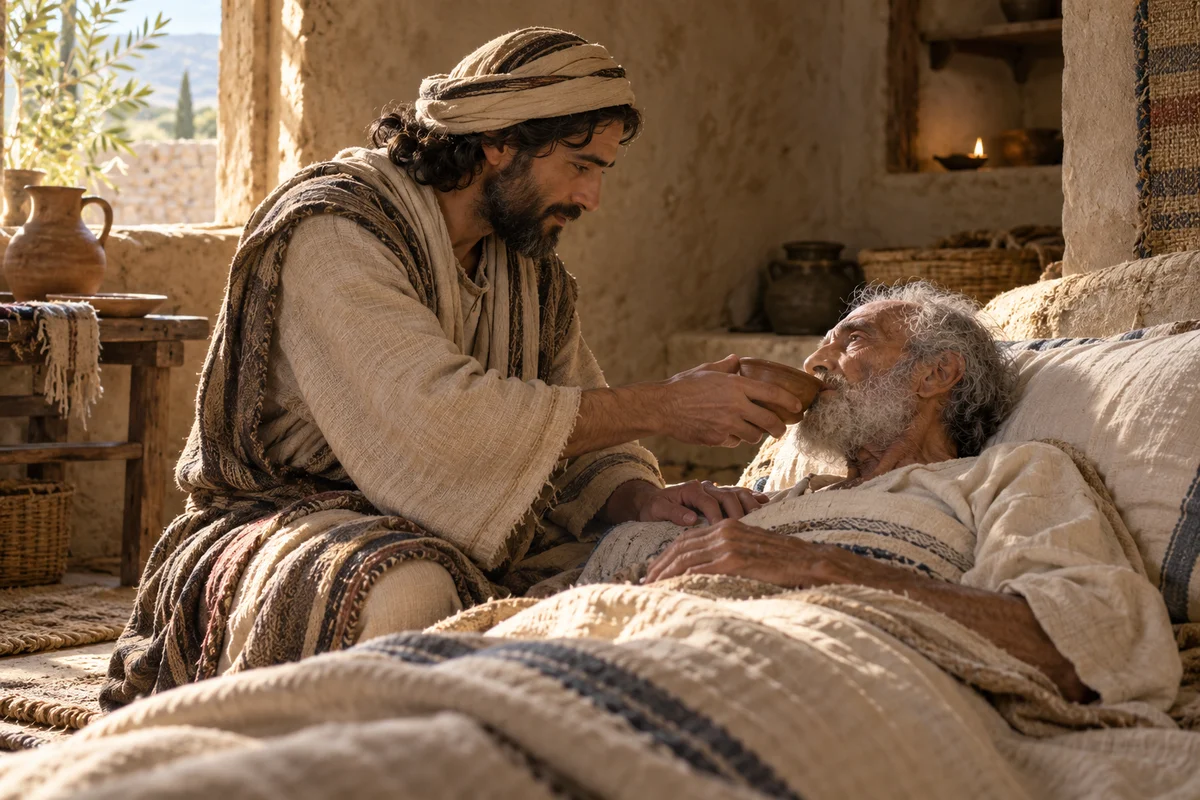
Verse 23 brings a discovery of grace. Through the struggle, God has held his right hand. His survival and renewed trust rest on divine support that has been present before he fully recognized it.
Verse 24 speaks of God’s guidance and the honor or glory that follows. Kidner sees a strong hope of being received into God’s presence beyond death. Goldingay understands the line as restoration to honor within earthly life, observing that the Hebrew does not explicitly say after death or into heaven. The promise of God’s future care is clear; how the line originally described that future remains debated (Kidner 2014, 291–92; Goldingay 2007, 413–14).
Both readings affirm that the present humiliation is not the last word about the worshiper. God’s purpose holds a future for him.
3.6 God becomes the measure of what is good
Psalm 73:25–28
The singer’s desire turns toward God. Heaven and earth together express the full horizon of his life, and throughout that horizon he finds no greater security. His attachment to God reshapes what he values.
Body and heart may fail, yet God remains his strength and portion. A portion was an allotted share, often land that sustained a family. Calling God his portion places his hope in a relationship whose sustaining power reaches beyond his exhausted resources (Goldingay 2007, 415).
Verse 27 warns against covenant unfaithfulness. Being far from God here concerns abandoning allegiance; it should not be confused with the painful feeling of distance experienced by someone still seeking him (Goldingay 2007, 416).
The final verse returns to goodness: nearness to God is good for the singer. He makes God his refuge and prepares to tell of God’s deeds. The voice that nearly announced the futility of faith now becomes a witness to sustaining grace.
05
4.0 Theological Reflection
4.1 Visible success cannot establish moral truth
Prosperity can conceal violence, and suffering can accompany faithfulness. The psalm calls us to examine conduct and its consequences rather than treating influence or comfort as proof of God’s approval. Its confidence in judgment preserves the hope that exploitation will be answered.
4.2 Grace holds the person whose trust is strained
The held hand stands within the confession of bitterness. God’s support enables the worshiper to recognize his failure and return to trust. A struggling believer can bring envy, resentment, and unanswered questions into this relationship and seek a transformed heart.
4.3 Nearness to God sustains hope for real justice
The sanctuary renews confidence that God will act in the world. The singer seeks refuge and deliverance as well as understanding. His discovery should strengthen faithful action on behalf of people suffering under oppression, while sustaining hope when the outcome remains unseen (Goldingay 2007, 417–19).
06
5.0 Canonical and Christological Horizon
Psalm 73 revisits the two paths of Psalm 1 under the pressure of experience. Like Psalms 37 and 49, it asks how to live when the wicked appear secure. Job 21:7–13 also confronts their prosperity, allowing the Bible’s wisdom tradition to speak honestly about a world whose visible outcomes often trouble faith.
Christians read this prayer within the story of Jesus. On the cross, the righteous sufferer encounters the violence of powerful people; in his resurrection, God vindicates him and opens the way toward life beyond death (Romans 8:34). This connection follows the broader biblical pattern of suffering and vindication, rather than treating Psalm 73 as a direct prediction of the crucifixion.
Jesus’ promise that his sheep cannot be snatched from his hand illuminates the psalm’s language of being held (John 10:27–29). It is a thematic connection, not an explicit quotation. The One who gives life also keeps his people.
Romans 8 brings suffering, divine support, and future glory together. The Spirit helps believers in their weakness, and nothing, including death, can separate them from God’s love in Christ (Romans 8:26–39). That hope includes the redemption of the body and the freedom of creation from decay (Romans 8:18–23).
Revelation carries the promise toward a renewed world where God dwells with humanity and tears and death end (Revelation 21:1–5). The hope of nearness to God reaches toward the healing of the world in which faith now trembles.
07
6.0 Life Application
1. Name the comparison troubling your heart. Tell God whose apparent success has awakened envy and what you fear losing. Ask for honesty without turning the confession into self-condemnation. 2. Examine how success was gained. Before admiring influence or wealth, consider whether people were harmed. Refuse a dishonest shortcut in one decision before you. 3. Bring questions into a trustworthy community. Speak with someone who can listen patiently and read this psalm with you. Let shared faith make room for careful, truthful wrestling. 4. Practice worship that includes lament. Set aside time to pray, read, and remember God’s deeds. Allow an unresolved question to remain before him as you seek his guidance. 5. Make renewed hope useful to a neighbor. Support someone affected by unfair treatment. Let trust in God’s justice shape a concrete act of honesty, protection, or solidarity.
08
7.0 Reflection Questions
1. What part of another person’s success do I envy, and what am I overlooking? 2. When have I treated obedience as an investment that should guarantee comfort? 3. How can I speak honestly about doubt while caring for those who listen? 4. What does God being my portion mean when a hoped-for outcome remains uncertain? 5. Where might I recognize God’s sustaining hand and respond with one faithful action?
09
8.0 Response Prayer
God who holds my hand, you know the comparisons that trouble me and the questions I struggle to speak.
When wrongdoing seems to flourish, keep me from following its path. Bring my wounded heart into your presence.
Give me courage to name injustice, humility to confess envy, and patience to seek your wisdom with others.
Be my strength when my resources fail. Let your justice reach those who suffer, and teach me to tell of your sustaining deeds.
Hold us in the hope of Christ’s resurrection, until your goodness fills the renewed world. Amen.
10
9.0 Window into What Comes Next
Psalm 73 finds renewed trust in God’s sanctuary. Psalm 74 confronts the devastation of that sanctuary and the distress of a whole community. The place associated with renewed understanding now stands within a larger cry for help.
This movement keeps trust open to further lament. Finding God’s nearness does not make the community’s wounds disappear; it gives those wounds a relationship within which they can be spoken. When a place that helped sustain our faith lies in ruins, how will we continue to seek the God who held our hand there?
11
10.0 Bibliography
Scripture: World English Bible. Psalm 73 and the biblical passages cited above. Psalm 73.
BibleProject. n.d. The Book of Psalms: Study Notes. Especially pages 14–15. Supplied study notes.
Goldingay, John. 2007. Psalms. Volume 2: Psalms 42–89. Baker Commentary on the Old Testament Wisdom and Psalms. Grand Rapids, MI: Baker Academic. Psalm 73, pages 397–419.
Kidner, Derek. 2014. Psalms 73–150. Kidner Classic Commentaries. Downers Grove, IL: InterVarsity Press. Originally published 1975. Psalm 73, pages 287–93.

Be the first to leave a comment.