


When the heart is pulled in two directions, how do we ask God to make it whole?
01
Overview
An endangered servant, a compassionate Lord, and the prayer for a heart wholly turned toward God
Key text — Psalm 86:11 (thematic rendering): Teach me your way, LORD, so that I may walk in your truth; bring my heart together to revere your name. This is a close thematic rendering of the verse, not a quotation claimed from a particular Bible translation.
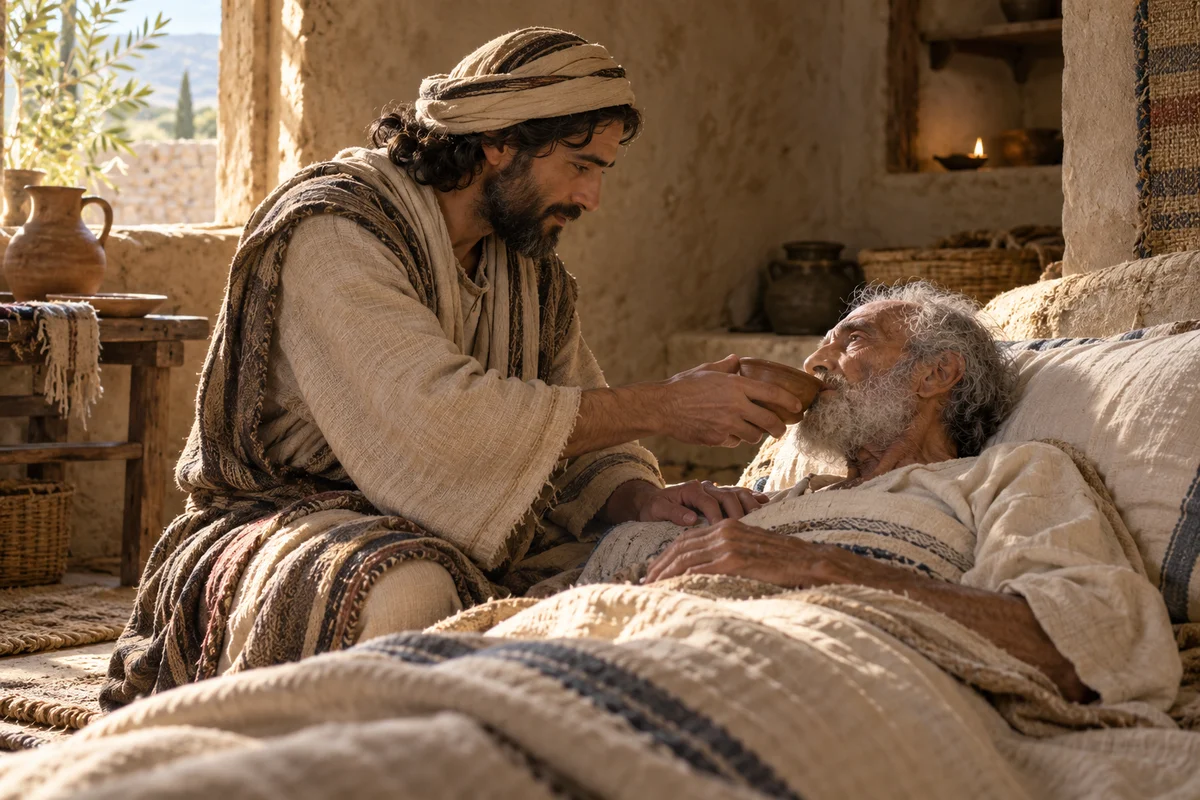
A person can know what is true about God and still struggle to trust him when danger arrives. One part of the heart remembers mercy. Another listens to the threats, counts the losses, and wonders whether prayer can make any difference. Psalm 86 does not conceal that tension. Its worshiper asks for protection, remembers the character of God, looks toward a world where every nation worships him, and then makes an especially searching request: Give me a heart that belongs to you without reservation.
02
1.0 Introduction
What is the most important thing to ask God for when life becomes dangerous?
We might answer: safety, healing, freedom from enemies, or a way out of the situation. The speaker of Psalm 86 certainly asks for those things. The first words seek God's attention because the worshiper is poor and needy (v. 1). Later we learn that arrogant people have risen against him and are seeking his life (v. 14). He pleads for strength and a visible sign of God's goodness (vv. 16–17).
Yet right in the middle of this prayer comes a request that reaches beneath the crisis: “Unite my heart to fear your name” (v. 11). The worshiper needs circumstances to change. He also needs his relationship with God to remain whole while he waits.
Psalm 85 prayed for the renewal of a wounded community. Psalm 86 places us beside one threatened person within that community. It shows how an individual's cry is sustained by Israel's shared memory of the God who revealed himself at Sinai. The speaker moves from need to praise and back to need again. This is not a failure of faith. It is the movement of faith that keeps addressing God while the trouble remains.
Central message: We can ask God for help without pretending to be strong. Because he is compassionate, forgiving, and faithful, we may entrust our danger to him and ask him to form in us an undivided heart that walks in his truth.
03
2.0 Historical and Literary Context
The superscription calls Psalm 86 “a prayer of David.” It is the only psalm bearing David's name in Book Three of the Psalter (Psalms 73–89). This makes its placement distinctive among the surrounding Korahite and Asaphic songs. The heading associates the prayer with David; the poem itself does not identify a particular event in his life, so a historical crisis cannot be assigned with confidence (Kidner 2014, 342–43).
The psalm is a personal lament and petition, woven from familiar scriptural language. John Goldingay notes that its phrases echo earlier prayers and the Exodus tradition. That does not make it an unoriginal patchwork. In distress, the faithful often borrow words the community has learned to trust, much as the Lord's Prayer gives believers common language for deeply personal needs (Goldingay 2007, 618–19).
A distinctive feature is the repeated address “my Lord” (Adonai) and the recurring self-description “your servant.” In the ancient social world, this relationship implied obedience, but also the master's responsibility to support and protect a servant dependent on him. The speaker does not claim to be powerful enough to save himself. He appeals to God's relationship with him (Goldingay 2007, 619–20, 629–30).
The poem unfolds in four principal movements:
1. Verses 1–7 — A needy servant appeals for mercy. The prayer urgently repeats its requests for attention, protection, joy, and an answer. 2. Verses 8–10 — The Lord is unlike every rival. His deeds point toward the day when all nations will acknowledge him. 3. Verses 11–13 — The servant asks for an undivided heart. Instruction, faithfulness, praise, and God's saving love belong together. 4. Verses 14–17 — The danger is named, and the plea returns. In the face of threatening people, the speaker rests his appeal on God's compassion and asks for help.
The arrangement is revealing. The actual threat is described near the end, after extensive prayer and confession. The center of the psalm is not the power of enemies but the character of God. Nevertheless, the poem ends without narrating a rescue. Its final words are still a plea and a confession of reliance. Kidner stresses that praise interrupts the pressure without evidence that the pressure has ceased (Kidner 2014, 342).
04
3.0 Walking Through the Text
3.1 “I am poor and needy”: weakness becomes the language of prayer
Psalm 86:1–3
The psalm begins with requests that God bend down to hear and answer. The speaker does not lead with achievements or accomplishments. He leads with need. “Poor and needy” can describe material vulnerability, but the context also expresses dependence: he has insufficient strength and resources for what confronts him.
In verse 2, the worshiper asks God to guard his life and says he is loyal, God's servant, and one who trusts him. The Hebrew word sometimes translated “godly” or “faithful” (hasid) should not be mistaken for a declaration of sinless perfection. It describes someone who belongs within a relationship of committed loyalty. The servant's trust is an appeal to the Lord whose steadfast love sustains that relationship (Kidner 2014, 342–43; Goldingay 2007, 620–21).
The language of “life” or “soul” here translates nephesh. In this setting, the worshiper asks for his living self to be kept safe, not for an invisible part to be rescued separately from his embodied existence. This matters for the rest of the psalm: the God who cares for the worshiper cares about a threatened human life.
He calls on God all day long (v. 3). Prayer has become the rhythm of an emergency. Repetition is not proof that he has too little faith. It reveals where he continues to turn. The person who cannot control the situation can still address God as Lord.
3.2 The Lord who hears is also the Lord who is good and forgiving
Psalm 86:4–7
The worshiper asks for joy, not only survival. The request to gladden the servant's life is startling because the trouble remains. He lifts himself toward God in trust, rather than waiting until circumstances improve before beginning to pray.
The reasons for hope then shift from the servant's need to God's character. The Lord is good, ready to forgive, and abundant in steadfast love toward those who call upon him (v. 5). The Hebrew language recalls the revelation of God's goodness and mercy associated with Sinai (Exodus 34:6–9). Goldingay highlights that the word for forgiving presents pardon as part of who the Lord is, not as something a reluctant God must be persuaded to do (Goldingay 2007, 622–23).
Verse 7 then returns to the prayer of distress: the worshiper calls because he believes God answers. The statement is not a report that a rescue has already occurred. It expresses trust in the one who is being addressed.
This balance is pastorally important. We may ask for help and joy at the same time. Yet we should not convert the psalm into a guarantee that every sincere prayer will produce immediate relief or the exact outcome requested. It grounds prayer in God's mercy, not in our ability to predict his actions.
3.3 From one frightened servant to all the nations
Psalm 86:8–10
At first glance the prayer changes subject. Instead of speaking about his own distress, the worshiper proclaims that none among the “gods” compares with the Lord or with his works. Then the horizon expands: all nations God has made will come and honor his name.
The language of “gods” has invited discussion. It can evoke the heavenly realm or the deities claimed by other nations, but verse 10 makes the point of this confession unmistakable: the Lord alone is God. The psalm is not inviting divided allegiance. Its declaration anticipates the prayer for a united heart in verse 11 (Kidner 2014, 343–44; Goldingay 2007, 623–24).
Notice the logic of verse 9. The nations belong within God's purpose because he made them. Israel's God is not merely a local patron concerned with one group. The Creator of every people has a claim on every people, and his work can be celebrated across human boundaries (compare Psalm 67; Isaiah 2:2–4).
For a worshiper feeling surrounded, this is a remarkable widening of perspective. His opponents seem powerful, but they do not define the future of the world. God's desire for the nations reaches further than the immediate conflict. The prayer does not tell us when or how all nations will turn to the Lord; it teaches us to see history under a horizon wider than our fear.
3.4 “Unite my heart”: the central prayer is for wholehearted allegiance
Psalm 86:11
This verse is the heart of the psalm. The speaker asks God to teach him his way, so that he may walk in truth, and to unite his heart in reverence for the divine name.
The request for teaching goes beyond receiving religious information. “Walking” describes a sustained manner of life. Kidner emphasizes the formation of faithful habits rather than simply finding an instruction for one difficult decision. Goldingay also emphasizes the worshiper's desire to experience God's faithfulness as a path he can trust in distress. These interpretations reinforce one another: the Lord's dependable way becomes the way in which his servant learns to live (Kidner 2014, 344; Goldingay 2007, 624–25).
Why ask for a united heart? Because the inner life can become divided. One part trusts God's goodness; another seeks safety at any cost. We may praise God with our lips while allowing fear, ambition, resentment, or the hunger for approval to shape our choices. The problem is not merely a lack of concentration. It is competing loyalties.
The verb translated “unite” in the traditional Hebrew reading means to make one or bring together. Some ancient versions read the consonants differently and suggest a request that the heart rejoice in revering God. The traditional reading fits the parallel concern for undivided loyalty. Importantly, neither reading turns the verse into a call for self-manufactured perfection. It is a prayer for God's forming work within the person (Goldingay 2007, 625; Kidner 2014, 344).
The speaker does not say, “When I have made myself worthy, then teach me.” He asks to be taught and made whole now. This is a life-changing model of prayer: Lord, change not only what threatens me, but also what claims my heart.
3.5 The wholehearted response is praise rooted in covenant love
Psalm 86:12–13
The prayer immediately moves into a promise of praise with all the heart. The whole heart requested in verse 11 becomes the whole heart offered in verse 12. Worship is not separated from inner renewal. The speaker responds to the God whose greatness he has confessed.
His reason is God's great steadfast love and the claim that God has rescued—or will rescue—his life from the depths of Sheol, the realm of death in ancient Israel's poetic vocabulary. The Hebrew verbal form and the poem's unresolved crisis allow more than one reading of the time involved. Many translations present a deliverance already given; other interpreters understand an anticipated deliverance spoken of in confidence. Kidner leans toward future rescue from death's power. Goldingay sees the depths of Sheol as vivid language for mortal danger from which the worshiper still seeks rescue (Kidner 2014, 344–45; Goldingay 2007, 625–26).
These readings do not require us to settle the whole biblical debate about the intermediate state or the nature of the soul from one verse. In context, the point is direct and urgent: the worshiper feels close to death, yet appeals to the God whose steadfast love is greater than the depths.
The confession can therefore be heard as remembered mercy, confident anticipation, or praise that stands amid unresolved threat. In each case the speaker locates his future in God's faithfulness rather than in the apparent strength of those against him.
3.6 The enemies return, but God's compassion has the final place
Psalm 86:14–17
Only now does the prayer give the clearest description of the crisis. Arrogant and ruthless people have risen against the worshiper and seek his life. They live as though God were irrelevant to their decisions (v. 14). The language resembles Psalm 54:3; such conventional prayer language does not identify a particular historical conspiracy (Goldingay 2007, 626–27).
The next word is the great contrast: “But you…” Instead of allowing the enemies to define God, the speaker recites God's own self-description from Exodus 34:6. The Lord is compassionate, gracious, slow to anger, and rich in steadfast love and faithfulness. Israel originally received that revelation after the crisis of the golden calf. It is a confession born in the knowledge of human failure—not a claim that God's people have always deserved mercy.
That context also protects the prayer from becoming a declaration that all our opponents must be evil simply because they oppose us. The psalmist entrusts judgment and protection to God. We can pray for safety and justice while still allowing God to examine our own conduct.
The speaker then asks God to turn toward him, strengthen him, and save the “son of your maidservant” (v. 16). This is a household image of belonging and long-standing dependence, not evidence that the worshiper is claiming special social privilege. The servant asks his Lord to act as a faithful protector.
Finally he asks for a sign of God's goodness, so that those who oppose him may see that God has helped and comforted him. The sign need not be a spectacular omen. It can be a recognizable act of deliverance and public vindication. Goldingay reads it as the manifestation of God's goodness that exposes the injustice of the attackers (Goldingay 2007, 628–29).
The poem does not end with an account of the sign arriving. It ends with the request itself and its trust-filled description of the Lord. The worshiper remains needy; the Lord remains merciful.
05
4.0 Theological Reflection
4.1 Our need is not a disqualification from prayer
The servant's vulnerability is the starting point of his appeal. He does not need to become invulnerable before approaching God. Grace creates space for truthful speech. Prayer can contain fatigue, fear, longing, and the repeated request to be heard.
4.2 God's compassion is rooted in his own identity
Psalm 86 draws directly on Exodus 34:6. The God who forgives and abounds in faithful love is not a different God from the one who calls people to righteousness. Compassion is not a temporary exception to his character. It belongs to the way he has made himself known. This also means God's mercy can lead us toward repentance rather than encourage us to ignore harm.
4.3 Divine lordship creates a call to trust and a promise of care
The repeated words “my Lord” and “your servant” can sound distant to modern ears. Here, however, the title is the basis for a bold appeal: a vulnerable servant calls upon the Lord with the resources to help. The analogy is not an endorsement of abusive human authority. Instead, it exposes how far human leadership falls short when powerful people refuse responsibility for those dependent on them.
4.4 A whole heart is a gift to seek and a life to practice
The speaker asks God to unite his heart but also commits to walk in God's truth. Formation involves divine grace and human response, not one in place of the other. In a divided world, the undivided heart is not the narrow heart. It is the heart free enough to give faithful love, truthfulness, and obedience their proper place.
4.5 Personal rescue and the worship of the nations belong in one prayer
Psalm 86 refuses to reduce faith to an individual's survival. The Creator who listens to one endangered servant also calls all peoples toward worship. Our legitimate concerns should never become an excuse to despise people beyond our own family, church, culture, or nation.
06
5.0 Canonical and Christological Horizon
The psalm's deepest roots lie in Exodus 34:6–9. Israel had broken trust almost as soon as its covenant relationship was established; God nevertheless revealed himself as compassionate and faithful. Psalm 86:5 and 15 bring that same confession into one person's hour of danger. The worshiper can ask for help because the Lord's character has already been disclosed in the story of his people.
Psalm 86 also stands beside Deuteronomy 6:4–5, where Israel is called to love the one God with the whole heart, and Jeremiah 32:38–40, where God promises to give his people one heart and one way. The prayer for an undivided heart therefore concerns covenant belonging, not merely individual emotional balance.
In the Gospels, Jesus teaches his followers to address God as Father, depend upon him for daily provision, ask for forgiveness, and seek deliverance from evil (Matthew 6:9–13). He also lives a life of undivided faithfulness to the Father while facing hostility. Christians may hear Psalm 86 as a prayer they can bring to God through Jesus, not because every phrase was originally a hidden prediction about Jesus, but because his life, death, and resurrection reveal the faithfulness and mercy on which the psalm relies (Hebrews 4:14–16; 5:7–9).
The psalm's vision of all nations worshiping their Creator finds a strong echo in Revelation 15:3–4, where the nations come to worship before God because his righteous acts have been revealed. This is a horizon of recognition and worship, not a claim that powerful nations have a right to compel religious allegiance by force. At the center of the Christian story stands the Lamb whose victory takes the form of self-giving love (Revelation 5:9–10).
Even the struggle for a united heart finds a new-covenant dimension. God does not simply demand an inner life without division; he promises his Spirit and a renewed heart (Ezekiel 36:26–27). The practical shape of that renewal is seen in truthful speech, patient trust, love of enemies, justice toward the vulnerable, and praise that survives unanswered questions (Matthew 5:43–48; James 1:5–8).
07
6.0 Life Application
- Begin prayer with the truth about your need. Name one real fear, limitation, loss, or relationship in danger. You do not need to impress God with a performance of strength.
- Let God's character give language to your prayer. Read Exodus 34:6–7 and Psalm 86:5, 15 slowly. Notice the difference between asking God to prove he is good and appealing to the goodness he has already revealed.
- Ask for a united heart before making your next decision. Identify one competing loyalty—approval, fear, status, anger, or the desire to control the outcome. Ask how the truth and faithfulness of God should shape a concrete choice.
- Seek protection without letting fear make you cruel. When facing intimidation, pursue appropriate safety, wise counsel, and responsible help. Praying for deliverance does not require exposing yourself or others to avoidable harm, nor does it authorize retaliation.
- Give thanks even while part of the story remains unfinished. Record a past mercy, an act of support, or a Scripture promise. Let remembrance strengthen the next faithful action, without pretending that the present difficulty has vanished.
08
7.0 Reflection Questions
- Where do I most easily feel “poor and needy,” and what prevents me from bringing that vulnerability openly before God?
- How does God's self-description in Exodus 34:6 change the tone of my prayers when I am frightened or ashamed?
- What competing loyalties divide my heart today? What would walking in God's truth look like in that situation?
- How can I pray for justice and protection without assuming that all criticism of me is unjust or that every opponent is beyond God's mercy?
- What changes when I remember that the God hearing my private prayer is also the Creator who calls every nation to worship him?
09
8.0 Response Prayer
Lord of mercy, bend toward me and hear. You know the need I cannot hide, the words I struggle to speak, and the fears that return when the day becomes quiet.
You are good and ready to forgive. Do not let shame drive me from your presence, or danger persuade me that you have ceased to care.
Teach me your way. Gather the scattered loyalties of my heart. Where fear pulls me aside, give me courage. Where pride hardens me, make me teachable. Where anger narrows my vision, lead me in your truth.
Protect those who are threatened. Strengthen those who are weary. Help me seek what is right without becoming cruel.
Through Jesus Christ, your faithful Son, let your steadfast love form a life of trust and praise in me, until every nation sees the goodness of your kingdom and all creation shares in your peace.
Amen.
10
9.0 Window into What Comes Next
Psalm 86 sounds like the prayer of one person who refuses to surrender his heart to fear. Yet at the center of that private appeal, the worshiper looks beyond himself: all the nations God made will come to worship him (v. 9).
Psalm 87 takes that surprising horizon and makes it the subject of an entire song. It celebrates Zion, but not simply as the private home of one nation. Peoples once thought far away—or even hostile—are spoken of as belonging within God's city. The movement from Psalm 86 to Psalm 87 is therefore a movement from the endangered servant to the world God intends to gather. The God who hears a small prayer has a future large enough for the nations.
11
10.0 Bibliography
Scripture: Psalm 86, with Exodus 34:6–9; Deuteronomy 6:4–5; Jeremiah 32:38–40; Ezekiel 36:26–27; Matthew 5:43–48; 6:9–13; Hebrews 4:14–16; Revelation 5:9–10; 15:3–4. Biblical phrases in this article are interpreted or briefly paraphrased unless otherwise identified.
BibleProject. n.d. The Book of Psalms: Study Notes. Project-provided study resource, especially its discussion of Book Three and the Psalter's literary arrangement.
Goldingay, John. 2007. Psalms. Volume 2: Psalms 42–89. Baker Commentary on the Old Testament Wisdom and Psalms. Grand Rapids, MI: Baker Academic. Commentary on Psalm 86, pp. 617–30.
Kidner, Derek. 2014. Psalms 73–150. Kidner Classic Commentaries. Downers Grove, IL: InterVarsity Press (original edition 1975). Commentary on Psalm 86, pp. 342–45.

Be the first to leave a comment.